

Reference · Crops
Pear
Pyrus L.
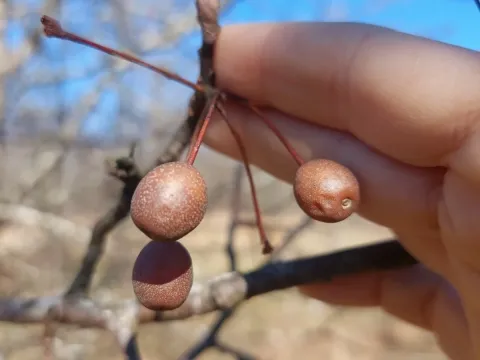
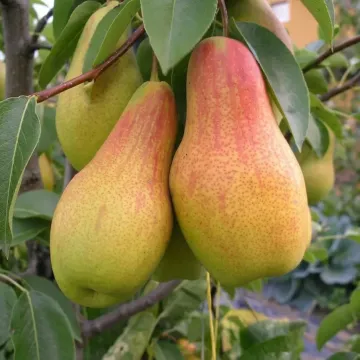
The pear (genus Pyrus L.) belongs to the Rosaceae family. It is a vital temperate fruit tree cultivated globally for its culinary and nutritional value.
19
items
What the section contains
 Pear
Pyrus communis L.
423 products
Pear
Pyrus communis L.
423 products
 Almond-leaved pear
Pyrus spinosa Forssk.
Almond-leaved pear
Pyrus spinosa Forssk.
 Birchleaf pear
Pyrus betulifolia Bunge
Birchleaf pear
Pyrus betulifolia Bunge
 Callery and birchleaf pear hybrid rootstock
Pyrus calleryana x P. betulifolia
Callery pear
Pyrus calleryana Decne.
Callery pear and Pyrus pyrifolia hybrid
Pyrus calleryana x Pyrus pyrifolia
Callery and birchleaf pear hybrid rootstock
Pyrus calleryana x P. betulifolia
Callery pear
Pyrus calleryana Decne.
Callery pear and Pyrus pyrifolia hybrid
Pyrus calleryana x Pyrus pyrifolia
 Common pear
Pyrus communis L. var. pyraster L.
Common pear
Pyrus communis L. subsp. pyraster (L.) Ehrh.
Hybrid of Pyrus bretschneideri and Pyrus communis
Pyrus x bretschneideri Rehder x Pyrus communis L.
Common pear
Pyrus communis L. var. pyraster L.
Common pear
Pyrus communis L. subsp. pyraster (L.) Ehrh.
Hybrid of Pyrus bretschneideri and Pyrus communis
Pyrus x bretschneideri Rehder x Pyrus communis L.
 Hybrids of common and Ussurian pear
Hybrids between Pyrus communis and P. ussuriensis
Hybrids of common and Ussurian pear
Hybrids between Pyrus communis and P. ussuriensis
 Hybrids of Pyrus communis, Pyrus pyrifolia, and Pyrus bretschneideri
Hybrids between Pyrus communis, Pyrus pyrifolia and Pyrus x bretschneideri
Hybrids of Pyrus communis, Pyrus pyrifolia, and Pyrus bretschneideri
Hybrids between Pyrus communis, Pyrus pyrifolia and Pyrus x bretschneideri
 Hybrids of Pyrus pyrifolia and Pyrus ussuriensis
Hybrids between Pyrus pyrifolia and Pyrus ussuriensis
Hybrids of Pyrus pyrifolia and Pyrus ussuriensis
Hybrids between Pyrus pyrifolia and Pyrus ussuriensis
 Le Conte pear
Pyrus x lecontei Rehder
Michaux pear
Pyrus x michauxii Bosc ex Poir.
Le Conte pear
Pyrus x lecontei Rehder
Michaux pear
Pyrus x michauxii Bosc ex Poir.
 Oleaster-leaved pear
Pyrus elaeagnifolia Pall.
Oleaster-leaved pear
Pyrus elaeagnifolia Pall.
 Pear-leaved pear
Pyrus pyrifolia (Burm. f.) Nakai var. culta (Mak.) Nakai
Pyrus bretschneideri
Pyrus x bretschneideri Rehder
Pyrus pyrifolia
Pyrus pyrifolia (Burm. f.) Nakai
Pear-leaved pear
Pyrus pyrifolia (Burm. f.) Nakai var. culta (Mak.) Nakai
Pyrus bretschneideri
Pyrus x bretschneideri Rehder
Pyrus pyrifolia
Pyrus pyrifolia (Burm. f.) Nakai
 Ussurian pear
Pyrus ussuriensis Maxim.
Ussurian pear
Pyrus ussuriensis Maxim.
Marketplace
Products in this section · 12



Pear
Pears thrive in deep, fertile, and well-drained loamy soils. Unlike apples, they are more sensitive to soil compaction and require adequate aeration for root development.
The optimal climate for pears includes moderate temperatures with sufficient chilling hours during the winter for proper dormancy and spring flowering.
Proper site selection is essential, preferring open, sunny locations with protection from late spring frosts, which can damage the delicate blossoms.
Regular maintenance includes pruning to ensure sunlight penetration into the canopy, which improves fruit quality and reduces the risk of fungal infections.
Pears are used for fresh consumption, canning, juicing, and producing distilled beverages. Productive life can span several decades with proper management.
Yield capacity is influenced by tree density, rootstock selection, and consistent irrigation. High-density planting systems have significantly increased output.
Pollination is a critical factor for success. Most pear cultivars are self-incompatible, requiring the presence of different compatible varieties nearby.
Nutrient management focuses on balanced applications of nitrogen, phosphorus, and potassium, tailored to the tree's growth stages throughout the season.
Commercial growers prioritize uniformity and sizing, often implementing thinning practices to ensure the remaining fruit develops optimal weight and taste.
Scab (Venturia pirina) is a major fungal disease that affects fruit quality and foliage health, requiring consistent monitoring.
Fire blight (Erwinia amylovora) is a devastating bacterial pathogen that poses a severe threat, requiring immediate removal and destruction of infected tissues.
Key insect pests include the codling moth and the pear psylla, both of which can significantly decrease marketable yields if left untreated.
Integrated Pest Management (IPM) strategies are highly recommended to balance the use of pesticides with natural biological controls and pheromone traps.
Sanitation in the orchard, including the removal of fallen leaves and infected fruit, is a fundamental practice to reduce inoculum for the following season.
Harvesting pears requires precision timing. Unlike many other fruits, pears do not ripen properly on the tree and must be harvested at the mature green stage.
Maturity indicators include the ease of fruit separation from the spur and changes in ground color from deep green to a lighter shade.
Pears are extremely sensitive to bruising; therefore, they should be handled with care during picking and packing to preserve their shelf life.
Post-harvest cooling is essential to stop the ripening process. Storing fruit at temperatures close to 0°C allows for an extended marketing window.
Packing for retail should include protective materials to prevent damage during transit, ensuring that the fruit reaches the consumer in prime condition.