
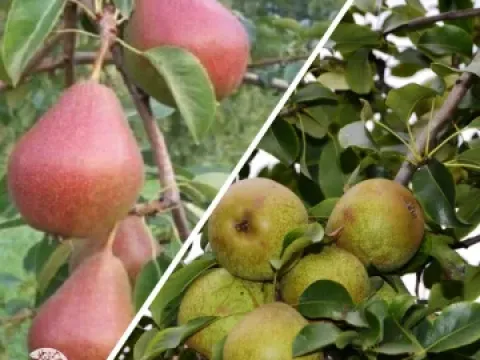
Pear hybrids
Pyrus hybrids
Pear hybrids (Pyrus hybrids) belong to the Rosaceae family and result from interspecific cross-breeding to combine desirable traits like disease resistance and flavor.
What the section contains
Pear hybrids
These trees require well-drained, deep, and fertile soil with a pH level between 6.0 and 7.0 to ensure healthy root development and efficient nutrient uptake.
Adequate sunlight exposure is critical; pear trees need full sun for at least six to eight hours a day to maximize fruit sugar content and overall tree vitality.
Climate requirements vary by hybrid, but most benefit from a temperate climate with a chilling requirement that allows for proper dormancy and spring blossoming.
Agronomic management includes regular irrigation during the growing season, strategic fertilization, and pruning to maintain an open canopy structure for airflow.
The yield of pear hybrids depends significantly on the rootstock used, which influences tree size, vigor, and the age at which the tree begins to produce fruit.
Modern intensive orchards using high-yield hybrids can reach full production capacity within a few years, offering significant economic returns for growers.
Depending on the cultivation intensity, mature trees can produce between 50 kg and 200 kg of high-quality fruit per season when managed under optimal conditions.
Pollination is a key factor; gardeners must ensure compatible pollinator varieties are planted nearby to maximize fruit set and prevent yield losses.
Thinning the fruit load early in the season is a recommended practice to ensure that the remaining fruit reaches optimal size, weight, and shelf-life quality.
Scab caused by Venturia pirina is a major threat to foliage and fruit quality, particularly in regions with high humidity and frequent spring rainfall.
Fire blight, caused by the bacterium Erwinia amylovora, is a devastating disease that can kill branches or entire trees if not identified and pruned early.
Common insect pests include the codling moth and the pear psylla, which can weaken trees and render fruit unmarketable if left untreated.
Integrated pest management (IPM) is essential, combining cultural practices like sanitation with targeted chemical or biological treatments when necessary.
- Prompt removal of dead or infected branches.
- Monitoring pest life cycles using pheromone traps.
- Applying dormant oil sprays to manage overwintering insects.
- Maintaining tree vigor through appropriate fertilization.
Harvesting pear hybrids is a precise process, as most varieties must be picked while firm, just before they reach their peak internal ripeness.
Growers monitor the color change and fruit firmness to determine the exact timing for the harvest, which helps in maximizing the storage period.
Fruits should be handled with care to prevent bruising, as damaged tissues are prone to rapid decay during the post-harvest storage phase.
Once harvested, pears should be cooled immediately to slow down respiration rates, which is crucial for maintaining texture and nutritional value.
Correct storage conditions, including controlled atmosphere and low temperatures, allow these fruits to be available long after the harvest season has concluded.