
Callery pear
Pyrus calleryana Decne.
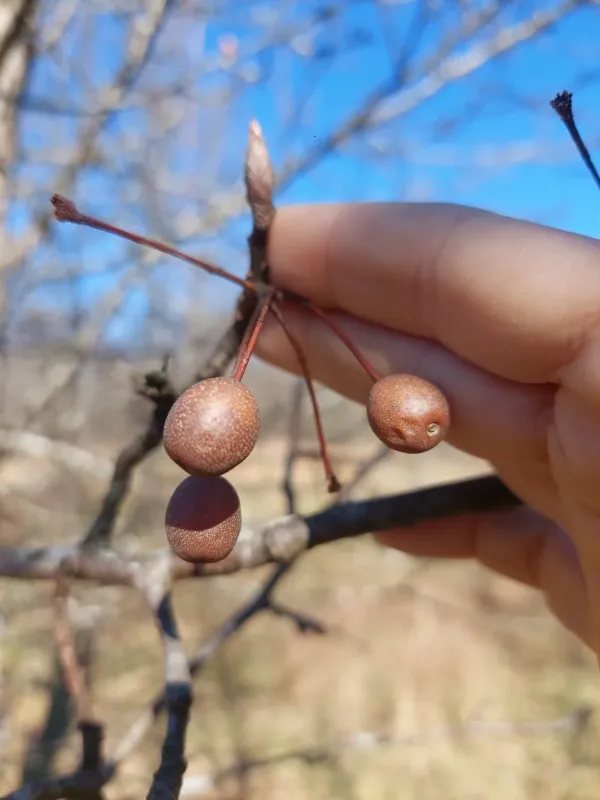
Description
Growing requirements
Callery pear (Pyrus calleryana Decne.), a member of the Rosaceae family, is a deciduous tree native to China, Korea, and Vietnam. It is widely recognized for its high tolerance to urban environmental stress.
The species thrives in full sun but maintains reasonable growth in partial shade. It is exceptionally tolerant of various soil types, including heavy clays, provided there is adequate drainage to prevent root rot.
This tree is favored for its adaptability to different climate zones. It shows remarkable drought resistance once established, making it a reliable choice for landscaping and industrial greening projects.
In agricultural practice, Pyrus calleryana is extensively utilized as a rootstock for commercial pear cultivars. Its excellent graft compatibility and vigor make it a preferred choice for large-scale nursery production.
Proper cultivation involves minimal maintenance beyond initial establishment. Periodic pruning is recommended to maintain a strong branch structure and improve air circulation within the canopy.
Main diseases and pests
The primary pathological threat to Callery pear is fire blight (Erwinia amylovora), a bacterial disease that can cause significant damage to twigs, blossoms, and leaves if left unchecked.
Pest management focuses on controlling common insects such as aphids, mites, and leaf miners. Regular monitoring during the growing season allows for targeted application of control agents.
Fungal diseases like scab can appear in high-humidity environments. Cultural practices, such as removing fallen leaves and pruning to ensure airflow, significantly reduce the probability of outbreaks.
Over-fertilization with nitrogen should be avoided as it leads to succulent growth, which is significantly more susceptible to bacterial infections during the spring and summer months.
Root health is crucial; therefore, avoiding waterlogged sites is a standard requirement. Proper site selection prevents anaerobic conditions that favor the development of various soil-borne pathogens.