
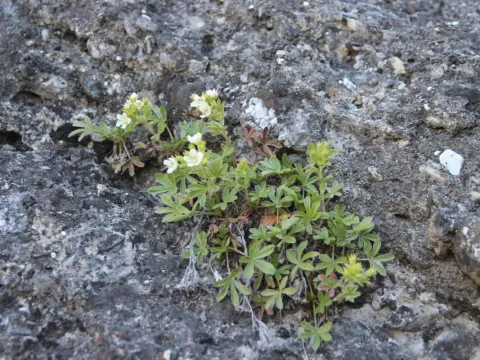
Rock cinquefoil
Potentilla petrophila
Rock cinquefoil (Potentilla petrophila) is a herbaceous perennial belonging to the Rosaceae family. Its natural habitat is concentrated in the mountainous limestone regions of the Balkan Peninsula, where it thrives in rocky crevices and shallow, nutrient-poor substrates.
What the section contains
Rock cinquefoil
The plant exhibits a compact, low-growing growth habit, often forming mats of small, grayish-green leaves. Its biological adaptations include a deep, woody root system and specialized leaf pubescence, which effectively minimize water loss under harsh mountain conditions.
Cultivation of this species requires strict adherence to its native environmental preferences. It demands mineral-rich, highly permeable soil with an alkaline reaction. Heavy, loamy, or organic-rich soils are generally unsuitable as they promote root rot and lead to rapid plant decline.
Full sun exposure is a mandatory condition for success. The species is highly intolerant of shade, which induces etiolation and weakens the structure of the plant. It performs best on south-facing rocky slopes or specially constructed rock garden features with excellent drainage.
Regarding moisture, rock cinquefoil prefers dry conditions. Regular watering should be avoided once the plants are established, as they possess efficient drought-tolerance mechanisms. Maintaining a dry root collar is essential for winter survival in regions with high precipitation.
Fungal diseases related to moisture excess pose the greatest threat to Potentilla petrophila. Root and crown rot are the most frequent causes of plant death, typically triggered by stagnant water in the root zone during dormant winter months or after heavy rain.
Insect pests, including aphids and spider mites, are common in sheltered garden environments. Aphids primarily attack the soft young growth, while spider mites exploit the drought-stressed foliage during hot, dry summer periods, causing noticeable discolouration.
Leaf-eating larvae of various lepidopteran species can cause aesthetic damage by creating holes in the foliage. Regular monitoring is advised, particularly during the active spring growth phase, to catch infestations before they cause significant defoliation.
Powdery mildew may occur if the plants are situated in areas with poor air circulation and high ambient humidity. The condition manifests as a white, dusty layer on the leaves, which hinders photosynthesis and weakens the overall vigor of the plant.
Integrated pest management strategies are recommended, prioritizing cultural controls such as improving drainage and providing adequate spacing. Chemical interventions should be used sparingly and only when cultural methods are insufficient to contain the spread of disease or pests.