
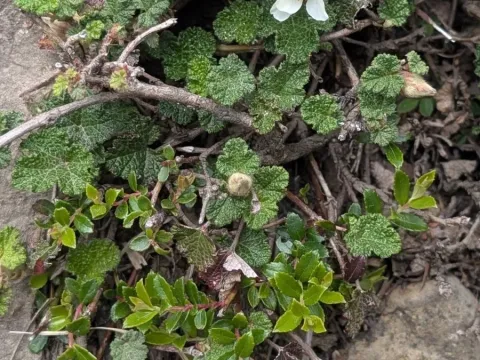
Rubus rolfei
Rubus rolfei
Rubus rolfei is an evergreen groundcover plant belonging to the Rosaceae family. Native to the mountainous regions of Taiwan, this species is well-adapted to temperate environments with distinct climatic variations.
What the section contains
Rubus rolfei
The culture thrives in partially shaded or sunny areas with well-drained, nutrient-rich soil. While the plant is highly adaptable, it requires protection from severe winter winds and excess moisture accumulation around the root zone.
For optimal growth, the soil should maintain a neutral to slightly acidic pH. Incorporating organic fertilizers during the early spring is recommended to stimulate vegetative development and enhance foliage density.
This species tolerates pruning very well, making it a popular choice for creating dense, attractive carpets in professional landscaping. Maintaining consistent soil moisture is crucial, especially during the active growth phases of young shoots.
In outdoor garden settings, the plant exhibits good winter hardiness in regions with mild winters; however, in colder northern climates, supplemental protection might be necessary during the first few years after establishment.
The primary pathological threats to Rubus rolfei include fungal diseases such as powdery mildew and various leaf spot infections, which tend to proliferate in conditions with high atmospheric humidity.
Pests common to the Rubus genus, including spider mites and aphids, can pose a risk to plant vitality. Regular inspection of the undersides of the leaves is advised for early detection and mitigation.
Effective management of fungal infections involves the application of copper-based fungicides or appropriate biological control agents when temperatures are moderate.
Ensuring proper spacing between individual plants improves air circulation, serving as an effective preventive measure against root and stem rot issues.
Preventive insecticide treatments are recommended in early spring, specifically before the flowering phase begins, to minimize potential damage to new, tender foliage.