
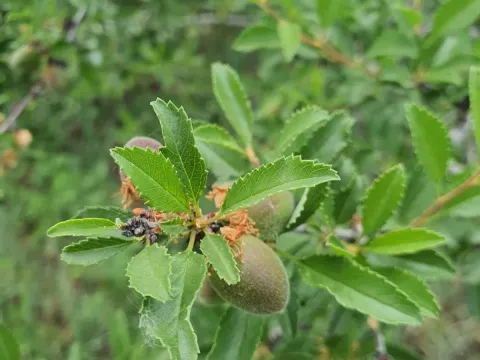
Pedunculate cherry
Prunus pedunculata
The pedunculate cherry (Prunus pedunculata) is a member of the Rosaceae family. Native to East Asian regions, specifically China and Mongolia, this shrub is well-known for its exceptional cold tolerance and hardiness. It is a deciduous plant that maintains its ornamental value throughout the growing season.
What the section contains
Pedunculate cherry
For successful cultivation, the plant requires open, sunny locations with direct sunlight exposure. It thrives in well-drained soil types, preferring loamy or sandy substrates. It is essential to ensure that the soil has a neutral or slightly alkaline reaction to prevent chlorosis. The plant is drought-resistant once established but requires moderate watering during the initial growth stages.
Regarding agrotechnical practices, pruning is essential for maintaining the desired shape and promoting healthy flower bud development. It is recommended to perform sanitary pruning in late winter or early spring. Fertilization with organic matter or complex minerals applied once a year provides enough nutrients for the plant to stay vibrant and productive.
Propagation is generally performed through seed stratification or green cuttings during the summer months. When planting, it is crucial to avoid low-lying areas where cold air or water might collect. Providing mulch around the base of the plant helps retain soil moisture and prevents the growth of competing weeds during the first two seasons.
The pedunculate cherry is primarily utilized for ornamental landscaping due to its early spring blossoms. It serves as an excellent hedge plant and is widely used in rock gardens. While the fruit is edible, its small size and tart taste make it more valuable for breeding programs aimed at improving the winter hardiness of domesticated stone fruit cultivars.
Major diseases affecting this species include brown rot and shot-hole fungus, which often occur due to excessive humidity. Management involves proper pruning to improve air circulation and applying fungicidal treatments if symptoms appear early in the season. Keeping the ground area clear of debris is a standard practice to reduce pathogen survival.
Insects like aphids, mites, and cherry weevils are the most common pests. They can cause premature leaf drop and weaken the plant structure if left unchecked. Integrated pest management, including the use of horticultural oils and targeted biological controls, is highly effective in maintaining the health and vigor of the pedunculate cherry throughout the summer.