
Almond-leaved pear
Pyrus spinosa Forssk.
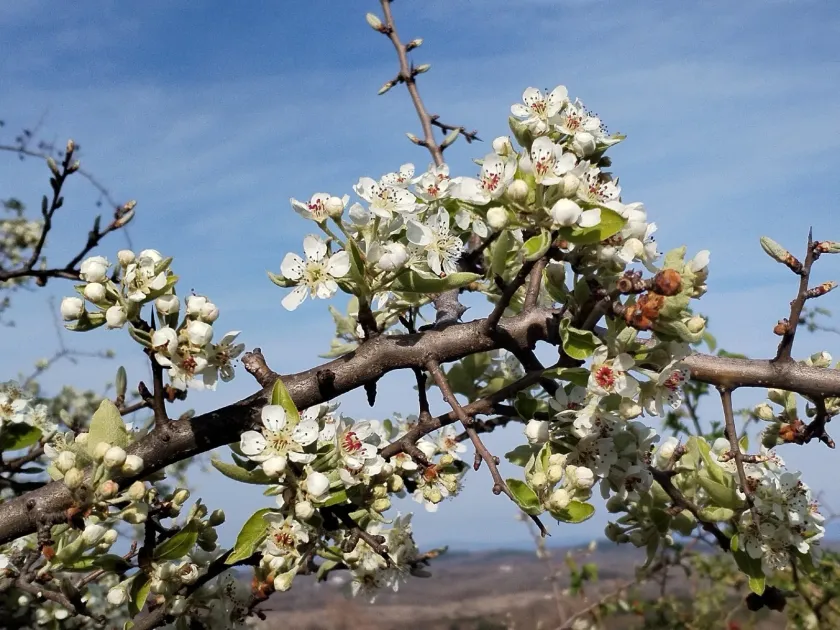
Description
Growing requirements
The almond-leaved pear (Pyrus spinosa Forssk.) belongs to the Rosaceae family and is a resilient deciduous tree or large shrub known for its thorny branches. It is native to the Mediterranean basin, where it thrives in diverse wild habitats.
This species is highly adapted to arid environments and possesses significant drought tolerance. It flourishes in full sun and requires well-draining soil, showing remarkable adaptability to rocky, shallow, or calcareous ground where more demanding species would fail.
The tree reaches moderate heights, typically between 2 and 5 meters, making it a suitable subject for dryland forestry and landscape restoration. Its deep rooting system allows it to survive long summer droughts typical of its origin range.
Cultivation requires little intervention, as the plant is well-suited to poor soils. However, early stage management involves weed suppression and light irrigation to ensure proper establishment of the root system in the first few years of growth.
In agricultural practice, Pyrus spinosa is primarily utilized as a drought-resistant rootstock for commercial pear varieties. Its ability to tolerate harsh pedoclimatic conditions makes it a valuable asset for breeding and sustainable orchard management.
Main diseases and pests
Pyrus spinosa is susceptible to common pome fruit diseases, including scab and monilia (brown rot), which can significantly affect fruit quality. Proper thinning of the canopy to ensure airflow is essential for disease management.
Pests such as aphids and leaf rollers frequently target the tender foliage of the tree. Integrated pest management (IPM) techniques should be employed to control these populations without disrupting the local ecological balance.
Bark beetles can pose a severe threat to the tree's health, particularly during periods of environmental stress. Regular monitoring and immediate removal of infested deadwood are critical steps in preventing colony expansion.
Bacterial fire blight is a constant concern for species within the Pyrus genus. Any symptomatic tissue, characterized by scorched-like appearance, must be pruned and disposed of carefully to protect the surrounding trees.
Small mammals and rodents may damage the bark of young trees during winter, making it necessary to install protective guards around the trunks in younger plantations to ensure long-term survival.