
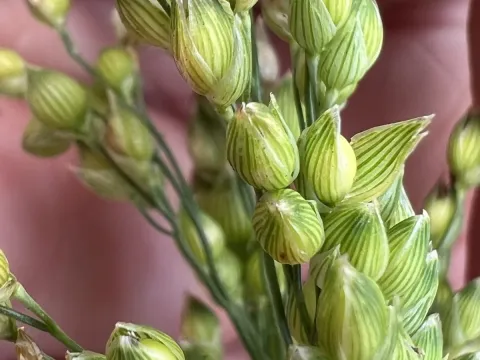
Proso millet
Panicum miliaceum L.
Proso millet is an annual herbaceous crop belonging to the Poaceae family. Seeds typically begin to germinate when soil temperatures reach 10–12 °C at sowing depth.
What the section contains
Proso millet
The optimal sowing period is determined by the soil warming process, ensuring the risk of late spring frosts has passed before seeds are planted.
Seeds are placed in moist soil at a depth of 3 to 5 centimeters to ensure rapid and uniform emergence across the entire field.
Sowing too early into cold soil can result in poor germination and increased competition from weeds, which often grow faster than millet in cool conditions.
Row or narrow-row spacing is the standard practice, providing the necessary plant density for optimal photosynthesis and yield development.
Proso millet is a thermophilic crop that requires a significant amount of heat during its growing season, with a minimum requirement of 1800–2200 °C.
It is recognized for its exceptional drought tolerance, allowing it to thrive in arid conditions where other cereal crops might fail due to lack of water.
While adaptable to various soils, it performs best in fertile, well-drained chernozems and chestnut soils with a neutral pH level.
Weed management is critical in the early stages of growth, as the plant is sensitive to shade and competition during its initial development phase.
Sunlight is vital for millet; it performs best in open fields with high light intensity, making proper plant spacing essential for crop quality.
The yield of proso millet is influenced by hybrid/variety selection, regional weather patterns, and the effectiveness of farm management practices.
Average yields under standard agronomic conditions typically range from 2.5 to 4 metric tons per hectare of harvested land.
Top-performing, high-intensity varieties can achieve yields of 5–6 metric tons per hectare under ideal soil moisture and fertility management.
Nitrogen fertilization is a key driver of yield, particularly when balanced with optimal plant population density during the vegetative growth phase.
Failure to control pests or late-season weeds can lead to significant yield losses, emphasizing the need for proactive field monitoring.
Smut is considered the most destructive disease, targeting the panicle and necessitating strict seed treatment protocols to ensure field health.
Bacteriosis and melanosis are also prevalent, causing plant stress and reducing the overall quality and commercial value of the harvested grain.
The millet stem maggot is the primary insect pest, as its larvae feed on the developing ovaries, significantly reducing seed set and yield.
Wireworms and leaf beetles can cause localized damage to seedlings and foliage, sometimes requiring chemical intervention in high-pressure years.
Integrated Pest Management (IPM) strategies, including crop rotation and resistant cultivars, are recommended to maintain long-term crop sustainability.
Harvesting proso millet requires precise timing because the grain within the panicle ripens unevenly, starting from the top down.
To avoid significant losses from shattering, farmers often opt for swathing (windrowing) when 75–80% of the grains have reached physiological maturity.
Direct combining is possible with modern, uniform-maturing varieties but requires careful adjustment of machine settings to prevent grain damage.
Grain moisture at harvest must be carefully monitored, and immediate post-harvest drying is necessary to keep moisture levels below 14%.
Proper storage hygiene is essential to prevent heating and mold growth, ensuring the quality of the millet for both human consumption and animal feed.