
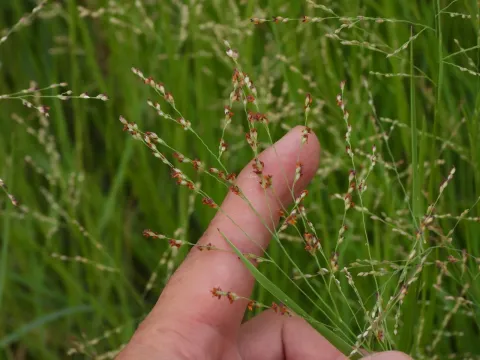
Torpedo grass
Panicum repens L.
Torpedo grass (Panicum repens L.) is a perennial grass species in the Poaceae family, known for its extensive network of rhizomes that act as a primary method of propagation and survival in diverse soil conditions.
What the section contains
Torpedo grass
Native to tropical and subtropical regions, this grass thrives in moist, sandy soils. It is frequently observed colonizing coastal areas, wetlands, and the edges of freshwater bodies where moisture levels are consistently high.
The plant demonstrates significant tolerance to varying soil conditions, although it performs best in soils with high organic content and adequate drainage, despite its preference for damp environments.
Regarding climate, Panicum repens is highly sensitive to frost. It requires a long growing season with high temperatures to reach its maximum biomass production potential.
Agronomic management of this species is complex; while it provides high-quality forage in some regions, its invasive nature requires strict containment protocols to prevent it from spreading into cultivated fields.
Fungal diseases such as rust and smut represent the most significant biotic threats, particularly in humid regions where leaf surfaces remain damp for extended periods.
Insect pests including stem borers and various moth larvae are known to penetrate the rhizomes and stalks, causing structural weakness and inviting secondary infections.
Because of its rapid spread through rhizome fragments, mechanical cultivation that is not thorough often exacerbates the infestation rather than controlling it, necessitating chemical interventions.
Nutrient deficiency, specifically a lack of potassium and phosphorus, can lead to stunted growth and increased susceptibility to opportunistic pests and diseases.
Integrated Pest Management (IPM) strategies for this species prioritize early detection and the use of targeted herbicides to manage rhizome density without degrading soil quality.