
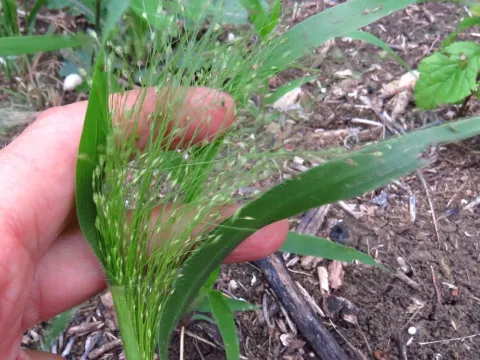
Witchgrass
Panicum capillare L.
Witchgrass (Panicum capillare L.) is an annual grass species belonging to the Poaceae family. While it is not a traditional crop, it is a significant weed in agriculture that thrives in disturbed soils and cultivated fields across North America and beyond.
What the section contains
Witchgrass
The plant originates from North America but has naturalized globally. It prefers sandy or loamy soils with good drainage but is notably resilient to poor soil conditions, allowing it to colonize areas that may be suboptimal for primary agricultural crops.
Botanically, it is characterized by its stiff, hair-covered stems and a highly branched, diffuse panicle. This panicle eventually breaks off at maturity, acting as a tumbleweed to disperse seeds across large landscapes, which makes localized containment difficult.
Regarding climate, witchgrass requires significant warmth to germinate and grow rapidly. It is a C4 plant, meaning it is highly efficient at photosynthesis in high temperatures and full sunlight, allowing it to outcompete crops in late summer heat.
Management requires a combination of cultural and chemical approaches. Shallow cultivation is effective for seedlings, while established plants often require herbicide intervention. Maintaining a dense crop canopy is the best biological strategy to shade out new seedlings.
Witchgrass acts as a potent competitor for soil moisture and nutrients, particularly in row crops like soybeans and corn. Its aggressive growth pattern can lead to severe yield reductions if left unmanaged during the early crop development stages.
The species serves as an alternative host for several pests, including aphids and leafhoppers. These insects often transfer viruses from witchgrass to valuable crops, causing stunting and loss of economic viability for the farmer.
Diseases such as various fungal blights and smuts are known to affect witchgrass. Because these pathogens can survive on the debris of this weed, they pose a constant risk of infection to subsequent grain crops planted in the same field.
Control is challenging due to the massive seed output of a single plant. Farmers must prioritize cleaning farm machinery to prevent the movement of seeds from infested zones to healthy parts of the field or neighbouring farms.
Chemical control programs often rely on pre-emergence herbicides that inhibit germination. Once established, post-emergence options are limited and should be applied while the weeds are still in the seedling stage for maximum efficiency.