
Mitchell grass
Sporobolus mitchellii
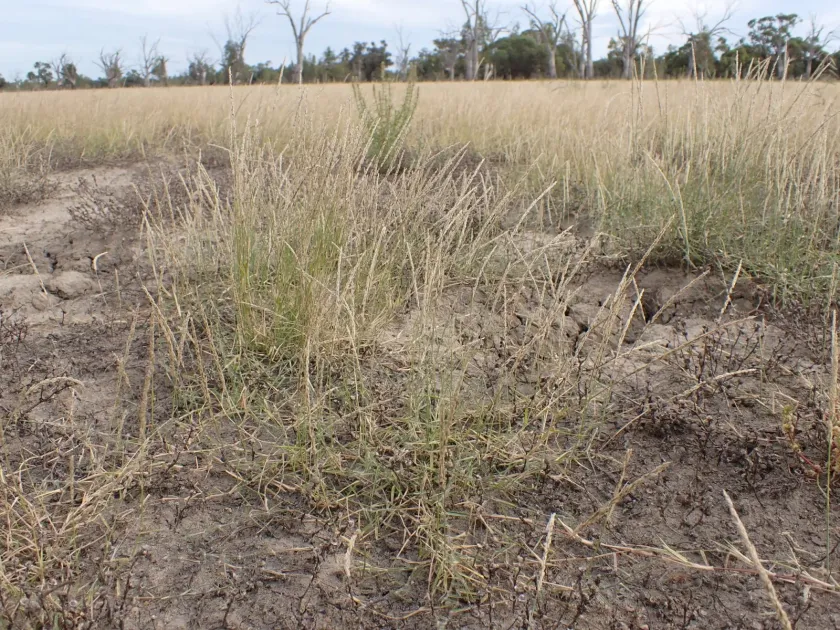
Description
Sowing dates
Mitchell grass seeds are typically sown during the spring or just before the onset of the wet season to ensure sufficient moisture for seedling emergence.
Seed depth should be kept shallow, as the small seeds require close soil contact and minimal coverage to protect them from dehydration during germination.
The optimal soil temperature for germination ranges between 20 and 25 degrees Celsius, aligning with the active growth period in its native climate.
Careful preparation of the seedbed is essential, as removing competing weeds early on significantly increases the chances of successful establishment.
In common agricultural practice, surface sowing followed by light soil rolling is often used to lock in moisture and ensure stable seed placement.
Growing requirements
Sporobolus mitchellii is a native Australian grass species, uniquely adapted to survive in harsh, arid regions where many other plants fail to grow.
The plant thrives in well-drained clay or loamy soils that can retain moisture from infrequent rainfall, but it cannot tolerate prolonged waterlogging.
This species is highly tolerant to saline soil conditions, making it an excellent candidate for the restoration of degraded landscapes in arid environments.
Being a perennial grass, it requires full sun exposure and does not perform well in shaded areas, making it ideal for open rangelands and vast pastures.
It is specifically adapted to high summer temperatures and possesses a deep, robust root system that helps it survive extreme drought conditions.
Yield
The biomass yield of Mitchell grass is highly dependent on annual rainfall patterns and the intensity of grazing management on the pasture.
In favorable growing years, this species can produce significant amounts of vegetation, serving as a vital source of nutrients for livestock.
The plant demonstrates remarkable regenerative capacity under controlled grazing, recovering rapidly after being eaten due to its active tillering nodes.
Nutritional value is highest during the early vegetative phase; however, protein levels tend to decline naturally as the stalks mature and ripen.
Agronomists recommend implementing rotational grazing systems to sustain long-term yield and prevent overgrazing during periods of extreme water stress.
Main diseases and pests
The primary threat to this culture is not pathogenic disease, but rather human-induced overgrazing, which depletes the root reserves of the plants.
In periods of uncharacteristic high humidity, leaf fungi may occasionally appear, though these instances rarely escalate into significant crop losses.
Various common grass pests may damage the flowering stems, which can negatively impact the yield of viable seeds needed for natural reseeding.
Invasive weed encroachment poses a significant risk to the establishment of young stands, particularly in areas where soil disturbance is high.
Grasshopper infestations during certain seasons can significantly reduce seed production, necessitating regular field monitoring to assess the damage.
Harvesting
Harvesting Mitchell grass seeds is conducted mechanically when the seed heads reach full physiological maturity and change their characteristic color.
Due to the asynchronous maturation of the seeds, direct combine harvesting is often preferred once an optimal ripening percentage has been achieved.
Farmers utilize gentle drying techniques after harvest to ensure that the moisture content is low enough to preserve high seed viability for future use.
For hay production, harvesting is traditionally scheduled during the heading phase, which provides the best balance of quality and nutritional value.
Post-harvest processing involves thorough cleaning and grading to remove chaff and debris, ensuring uniform distribution during subsequent planting cycles.