
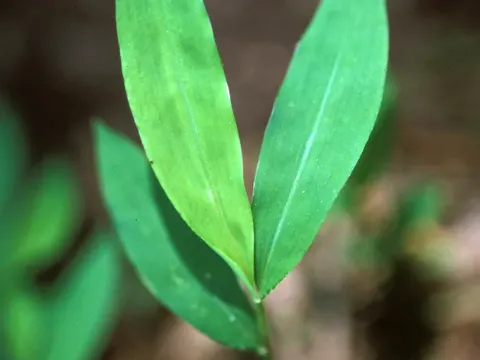
Microstegium
Microstegium
Microstegium is a genus of grasses in the Poaceae family, known for its unique growth habit. Most species within this genus are characterized by slender, sprawling stems that often root at the nodes, allowing the plant to form extensive ground covers.
What the section contains


Microstegium
Botanically, Microstegium species possess narrow, lanceolate leaves and terminal inflorescences composed of slender racemes. The species is highly adaptable, exhibiting both self-pollinating and cross-pollinating mechanisms to ensure seed set across diverse environments.
Climate requirements primarily focus on moisture and shade. The plant thrives in humid conditions, often colonizing disturbed forest edges, riverbanks, and shaded slopes where soil moisture remains consistently high throughout the growing season.
Soil preferences lean towards nutrient-rich loams with adequate drainage but high water retention. While it can survive in various soil types, its growth rate is significantly higher in soils with high organic matter content and moderate pH levels.
Agricultural management of Microstegium is complex, as it is classified as a highly invasive species in many parts of the world, notably in North America. Its aggressive spread makes it a focus for ecological monitoring and control rather than standard cultivation.
In regions where it is considered an invasive threat, pathogens such as various rust fungi and leaf spots can affect its density. These diseases often manifest during periods of prolonged humidity and temperature fluctuations.
Insects and generalist herbivores can cause significant foliar damage, though they rarely eradicate the population. Typical threats include aphids, beetles, and larvae that utilize the lush biomass as a food source during the summer months.