
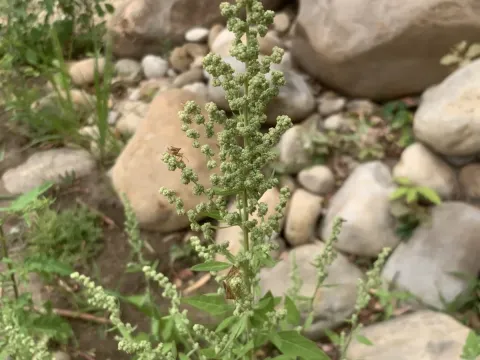
Green goosefoot
Chenopodium viride
Sowing of Chenopodium viride typically takes place in early spring once the soil temperature reaches 8–10 degrees Celsius, which is optimal for rapid seed germination.
What the section contains
Green goosefoot
The seeds should be planted at a shallow depth of no more than 1–2 centimeters, ensuring they are covered with sufficient soil while remaining close to the surface for consistent emergence.
The most common planting pattern involves row sowing with spacing of about 15–20 centimeters between rows, allowing for adequate space for root development and light penetration.
Seeding rates should be adjusted based on seed viability and the desired density of the stand to prevent overcrowding, which can lead to competition for nutrients and water.
Following sowing, light rolling of the soil surface is recommended to ensure firm contact between the seeds and the moist soil layers, which promotes more uniform field emergence.
As a member of the Amaranthaceae family, green goosefoot is known for its remarkable ecological plasticity and ability to thrive in various temperate climate conditions.
The crop prefers fertile, well-drained loamy or sandy soils with a neutral to slightly acidic pH, which are essential for achieving its maximum biological yield potential.
The plant is highly heliophilic and requires full exposure to sunlight; therefore, it is sensitive to shading from other dense crops or persistent weed populations.
While exhibiting moderate drought tolerance, the crop performs best when adequate soil moisture is maintained during the early and mid-vegetative stages of its growth.
Application of nitrogen-based fertilizers significantly enhances vegetative biomass production and improves the overall nutritional quality of the forage provided by the plant.
The biomass yield of green goosefoot can be quite substantial under well-managed conditions, making it a viable option for various agricultural forage programs.
On high-fertility soils, the plant is capable of producing multiple cuts within a single growing season if harvesting is conducted before the onset of reproductive stages.
Seed production yields vary based on timing and harvest methods, as the plant tends to drop seeds easily once they reach full physiological maturity in the field.
Longer daylight hours in specific geographical regions can act as a catalyst for increased photosynthetic activity, leading to higher dry matter accumulation per hectare.
Optimizing the management of soil nutrients and minimizing weed pressure are the primary factors that determine the ultimate success and profitability of the crop yield.
Common phytosanitary issues include powdery mildew, which often develops during periods of high humidity and when plant stands are too dense for proper airflow.
Root rot pathogens can be a concern if the crop is planted repeatedly in the same field, highlighting the necessity of effective crop rotation to maintain soil health.
Pests such as aphids and leaf-eating beetles may infest the crop in the early growth stages, potentially hindering the development of healthy, vigorous foliage.
Integrated pest management strategies, including the use of certified seed and proper field sanitation, are vital to reducing the risks of disease and pest outbreaks.
- Regular cultivation of inter-row spaces to remove weeds.
- Monitoring moisture levels to avoid fungal growth.
- Balanced nutrient application to boost plant immunity.
Harvesting for forage is ideally performed during the budding stage, before the plants produce excessive woody tissue and while leaves are richest in protein and nutrients.
Mechanical harvesting using mowers is effective, provided the cutting height is calibrated to ensure efficient collection while minimizing losses of the leafy material.
After cutting, the biomass should be dried promptly to prevent spoilage and fermentation, especially if the harvest occurs during periods of fluctuating weather conditions.
When harvesting for seeds, farmers must carefully time the operation to catch the seeds at peak maturity while minimizing losses caused by natural shattering of the seed heads.
Post-harvest conditioning, including thorough cleaning and drying of the seeds, is critical for achieving a storage moisture content that ensures long-term viability.