
Microchloa
Microchloa
Microchloa is a genus of annual and perennial grasses belonging to the Poaceae family. These plants are recognized for their resilience and ability to thrive in challenging environments where soil fertility is limited and water availability is highly erratic, making them significant in specific ecological niches.
What the section contains


Microchloa
The origin of Microchloa is primarily associated with tropical and subtropical regions, with high biodiversity found in Africa and parts of the Americas. These grasses naturally occupy open grasslands and arid terrains, demonstrating a high tolerance for poor, stony, and sandy soil conditions that typically exclude more demanding agricultural species.
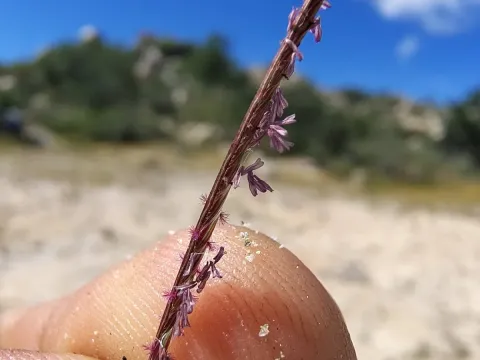
Botanically, Microchloa is characterized by its compact, tufted growth habit and characteristic slender, one-sided spikes. These features provide a structural advantage for survival, allowing the plant to minimize transpiration and maintain physiological processes even under intense solar radiation and high temperatures.
The environmental requirements of the genus are centered on well-drained, porous soils and high light exposure. They require full sun to reach maturity and produce viable seeds. In conditions of extreme drought, the plant may enter a state of dormancy to protect its vegetative core until favorable conditions return.
From an agricultural standpoint, Microchloa serves as an important component for pasture development in marginal zones and acts as an effective soil stabilizer. Its dense root network contributes to the reduction of wind and water erosion, which is crucial for the restoration of degraded landscapes in tropical climates.