
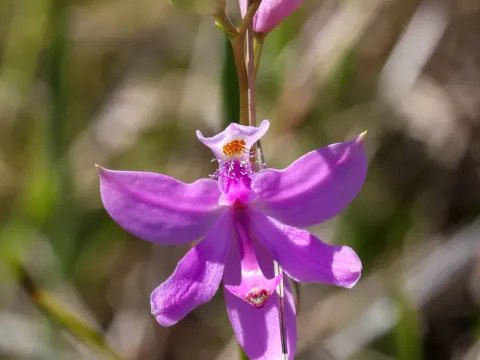
Grass pink
Calopogon pulchellus
Grass pink (Calopogon pulchellus) is a perennial herbaceous plant belonging to the Orchidaceae family. It is native to the wetlands and peat bogs of North America, where it thrives in naturally acidic and damp environments.
What the section contains
Grass pink
Botanically, this orchid grows from a small corm and develops grass-like leaves and an erect inflorescence. A key distinguishing feature of this species is its non-resupinate flower, meaning the lip is located at the top of the blossom rather than the bottom.
Cultivation requirements involve providing a moist, acidic substrate, typically composed of peat moss and perlite or sand. The plant is intolerant of drought and requires high humidity levels, as well as a pure water supply, such as rainwater, to prevent mineral buildup in the growing medium.
In terms of light, the species prefers full sun to partial shade. Exposure to direct sunlight helps stimulate flower production, provided the root zone remains consistently cool and moist, which mimics the natural conditions of a marshy meadow.
The primary use of the plant is ornamental, as it is a prized specimen for botanical gardens and specialized collectors. Its vibrant color and unique structure make it a focal point in bog gardens or wet landscape installations, adding ecological diversity to the site.
The major threats to this orchid include soil-borne pathogens, specifically fungi like Fusarium, which thrive when drainage is insufficient. Ensuring proper soil aeration and avoiding stagnant, waterlogged conditions are critical for long-term survival.
Common pests affecting the plant include aphids, which cluster on the flowering spikes, and spider mites, which can infest the foliage during hot, dry periods. Integrated pest management, focusing on early detection and physical removal, is recommended to keep the plants healthy.