
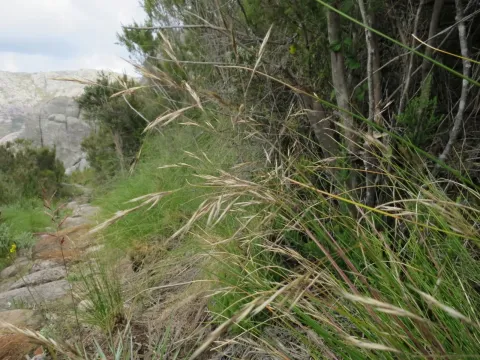
Merxmuellera
Merxmuellera
Merxmuellera is a genus of perennial grasses belonging to the Poaceae family. These plants are primarily native to the southern regions of Africa, where they thrive in diverse ecological niches ranging from mountainous terrain to dry, sandy plains.
What the section contains

Merxmuellera
The genus is well-adapted to environments with nutrient-poor soils, demonstrating a high degree of resilience to extreme environmental stressors. Their ability to manage nitrogen efficiently makes them successful in habitats where other grass species might struggle.
Botanically, Merxmuellera is recognized for its dense, tussock-forming habit, which provides structural integrity and soil protection. This characteristic is particularly important in preventing erosion in the wild, high-altitude landscapes where these grasses are naturally found.
Climate requirements for this plant generally involve a preference for temperate to cool conditions with seasonal rainfall patterns. They are not typically suited to tropical heat or waterlogged conditions, preferring well-draining substrates to ensure root health.
Agronomically, managing these grasses requires careful attention to soil moisture levels. While they are hardy, they respond best to management strategies that mimic natural conditions, avoiding intensive irrigation or over-fertilization that could compromise their hardiness.
Merxmuellera species can be susceptible to various fungal pathogens, particularly in regions where humidity levels rise significantly during the growing season.
Leaf rust and different types of powdery mildew represent the most common threats to the foliage, which can limit the plant's photosynthetic capacity and total biomass yield.
Root-feeding insects can also pose a significant challenge, especially in established stands where such pests can multiply over several years if not managed properly.
Environmental stress, such as extreme frost following a warm period, can weaken the plants, making them more vulnerable to secondary infections by opportunist pathogens.
Strategic management practices, including proper grazing or cutting cycles and ensuring adequate air circulation within the stand, are essential to mitigating these threats effectively.