
Panicum deustum
Panicum deustum Thunb.
Description
Growing requirements
Panicum deustum Thunb., commonly known as the burnt-panicle panicgrass, is a perennial plant belonging to the Poaceae family. Originating from Southern Africa, it is adapted to diverse ecological niches, ranging from woodland savannahs to open grasslands.
This grass thrives in well-drained, sandy to loamy soils that provide sufficient aeration for its root system. It exhibits excellent resilience in low-fertility soils, making it a viable candidate for land reclamation projects in various semi-arid environments.
Climatic requirements involve a warm growing season, as the plant is sensitive to frost. It prefers regions with seasonal rainfall patterns, displaying a high degree of drought tolerance once the root system is well-established in the soil profile.
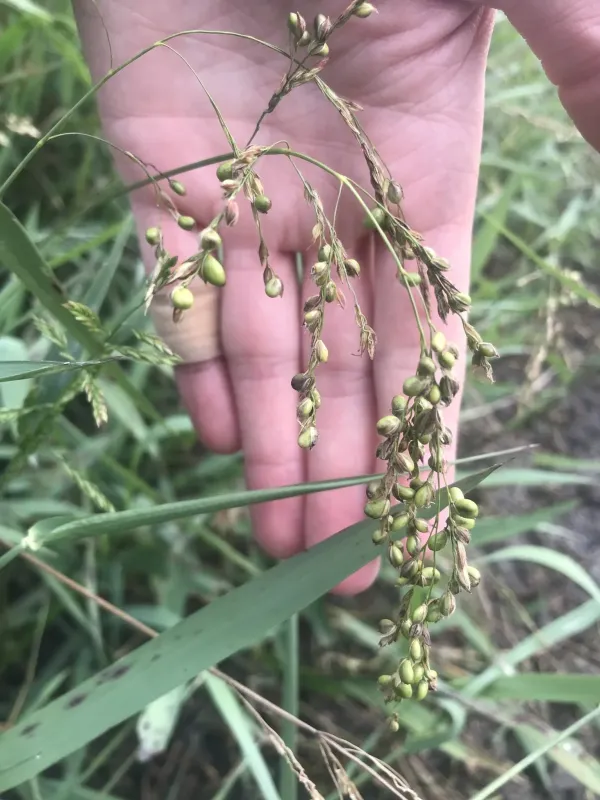
Botanically, the plant is recognized by its stiff, erect culms and dark, spike-like panicles that resemble scorched or burned tissue. These inflorescences are distinct in color, contributing to the species' unique appearance compared to other members of the genus Panicum.
In agricultural practice, Panicum deustum is utilized primarily for forage production and pasture improvement. Its ability to provide stable biomass under challenging environmental conditions offers significant value for livestock producers in tropical and subtropical regions.
Main diseases and pests
Like many perennial grasses, Panicum deustum is susceptible to various fungal pathogens, particularly those affecting leaf tissues such as rust fungi. These infections are more prevalent during periods of prolonged humidity and poor air circulation.
Pest pressure is frequently driven by stem-boring insects and foliage-feeding caterpillars, which can compromise the structural integrity of the plant. Integrated Pest Management (IPM) strategies are recommended to maintain healthy stands.
Root rot pathogens represent a latent threat, usually triggered by waterlogged soil conditions. Ensuring proper drainage is the most effective preventative measure against these devastating soil-borne diseases.
Monitoring for signs of nutritional stress is essential, as weakened plants are inherently more vulnerable to secondary infections. Regular soil testing helps maintain the balance of essential minerals required for robust plant immunity.
Effective management includes the removal of old crop debris after the harvesting season. This practice significantly reduces the overwintering potential for pathogens and pest larvae, leading to a healthier start for the subsequent growth cycle.