
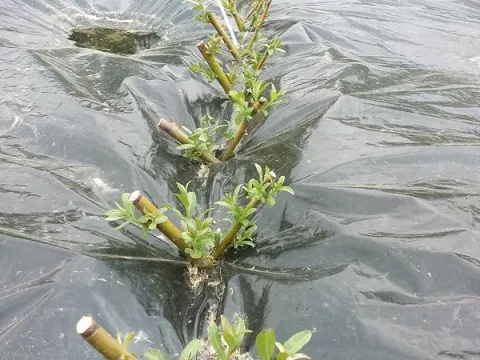
Green willow
Salix viridis
The propagation of green willow is primarily achieved through vegetative cutting methods. The optimal time for planting is early spring, just before the sap begins to flow and the buds start to break, ensuring the cuttings have enough time to establish roots.
What the section contains
Green willow
Cuttings are usually harvested from one-year-old shoots and cut into lengths of 20 to 30 centimeters. It is essential to ensure that each cutting has at least 3 to 4 viable buds to facilitate healthy growth of the root system and future aerial parts.
When planting, the cuttings are inserted into well-prepared, moist soil, leaving only the uppermost bud exposed above the surface. Proper planting depth is crucial for stability and to prevent the cutting from drying out during the initial growth phase.
While seed propagation is possible, it is rarely used commercially due to the short shelf life and low germination rates of willow seeds. If seeds are used, they must be sown immediately after collection in a consistently damp substrate.
Agronomists must ensure the soil temperature has reached at least 8–10 degrees Celsius before planting, as this temperature threshold significantly boosts metabolic activity and speeds up the rooting process in cuttings.
Green willow belongs to the Salicaceae family and thrives in environments with high soil moisture content. It is particularly well-suited for alluvial soils and damp, fertile areas where groundwater levels remain relatively close to the surface.
As a light-loving species, this crop requires open areas without any shading. Exposure to full sunlight is critical for maximizing biomass production, as insufficient light often leads to stunted growth and poor-quality wood development.
The plant is highly adapted to temperate climates, exhibiting excellent cold resistance, which allows it to survive harsh winters. Furthermore, it is tolerant of periodic flooding, making it an ideal choice for stabilizing riverbanks and erosion-prone areas.
Soil pH should ideally range from slightly acidic to neutral for the best performance. While willow is hardy, it struggles in excessively saline, highly alkaline, or poor-draining peat soils, which necessitates prior soil testing and amendment.
During the first two years of establishment, weed control is essential to ensure the willow can compete effectively for nutrients. Regular cultivation of the inter-rows helps improve soil aeration and fosters a stronger root foundation.
The yield of green willow is highly dependent on the intensity of management and the maturity of the plantation. Under ideal conditions, annual biomass yields can reach 15 to 20 metric tons of dry matter per hectare.
Maximum productivity is typically observed from the fourth year onwards following the initial coppicing (cutting to the ground). This cycle encourages the development of dense, vigorous shoots that are optimal for harvest.
Fertilization, particularly with nitrogen-based complexes, is vital for high output. On nutrient-deficient soils, the lack of fertilization can result in a significant decrease in biomass, highlighting the importance of regular soil nutrient management.
Mechanized harvesting is standard practice for bioenergy plantations. Specialized harvesters cut and chip the willow in a single pass, which is a cost-effective way to manage large areas and prepare the material for immediate processing.
Genetics play a major role in yield variability. Utilizing improved clones rather than wild-harvested stock can significantly enhance both the quality and volume of the wood produced, thereby increasing the overall economic profitability.
Willow plantations are primarily threatened by leaf-eating insects, such as willow beetles, which can strip a tree of its foliage in a short period, drastically reducing its capacity for photosynthesis and lowering vigor.
Fungal diseases, especially willow rust, are common in humid and cool growing seasons. The disease manifests as orange or brown pustules on the undersides of leaves, often leading to premature defoliation and weakened plant health.
Bark necrosis, often caused by pathogens like Cytospora, poses a severe threat by killing individual branches or even entire plants. These infections usually enter through mechanical damage or areas weakened by winter frost.
Effective management includes integrated pest control, using targeted fungicides and insecticides during high-risk periods. Regular field scouting is necessary to detect outbreaks early before they spread throughout the plantation.
Sanitation practices are equally important; removing and destroying infected woody debris after harvest helps break the life cycle of pests and fungal spores, ensuring a cleaner environment for the next growing season.
Harvesting for technical use is best performed during the plant's winter dormancy period. Cutting during this time minimizes the moisture content in the wood, which is essential for storage and prevents the development of rot.
For basketry or weaving, harvesting must be done manually or with precise tools to maintain the integrity of the rods. Sorting should occur immediately post-harvest to ensure the material remains flexible and uniform in quality.
When harvesting for biomass, the material must be dried down to a moisture content of 15-20 percent before storage. Well-ventilated storage facilities are necessary to maintain the caloric value of the wood and prevent fungal growth.
After the harvest, proper field cleanup is required. Removing leftover branches and clearing the field of debris helps in monitoring the regrowth of the next cycle and prevents the accumulation of inoculum from diseases.
Logistics are key in the harvesting process, as prompt transport of the chipped biomass to end-users or processing facilities prevents deterioration. Efficient management at the harvest stage is a cornerstone of plantation profitability.