
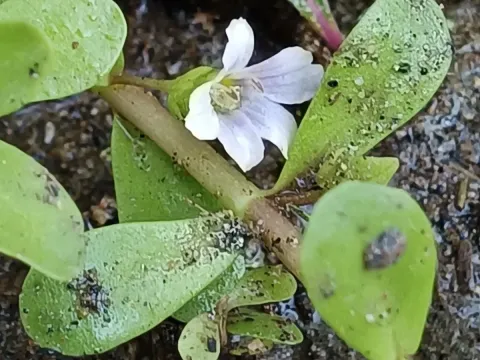
Bacopa
Bacopa
Sowing Bacopa seeds for transplants in temperate climates usually begins in late winter, around February or early March. The seeds of this crop are very small, so they are spread over the surface of moist substrate without being buried in the soil.
What the section contains
 Bacopa australis
Bacopa australis
Bacopa australis
 Bacopa calycina
Bacopa calycina
Bacopa calycina
 Bacopa caroliniana
Bacopa caroliniana
Bacopa caroliniana
 Bacopa crenata
Bacopa crenata
Bacopa crenata
 Bacopa cuneifolia
Bacopa cuneifolia
Bacopa cuneifolia
 Bacopa dianthera
Bacopa dianthera
Bacopa dianthera
 Bacopa egensis
Bacopa egensis
Bacopa egensis
 Bacopa eisenii
Bacopa eisenii
Bacopa eisenii
 Bacopa erecta
Bacopa erecta
Bacopa erecta
 Bacopa floribunda
Bacopa floribunda
Bacopa floribunda
 Bacopa hamiltoniana
Bacopa hamiltoniana
Bacopa hamiltoniana
 Bacopa hybrids
Bacopa hybrids
Bacopa hybrids
 Bacopa innominata
Bacopa innominata
Bacopa innominata
 Bacopa madagascariensis
Bacopa madagascariensis
Bacopa madagascariensis
 Bacopa monnieri
Bacopa monnieri
Bacopa monnieri
 Bacopa myriophylloides
Bacopa myriophylloides
Bacopa myriophylloides
 Bacopa repens
Bacopa repens
Bacopa repens
 Bacopa rotundifolia
Bacopa rotundifolia
Bacopa rotundifolia
 Bacopa salzmannii
Bacopa salzmannii
Bacopa salzmannii
 Bacopa sessiliflora
Bacopa sessiliflora
Bacopa sessiliflora
 Bacopa stricta
Bacopa stricta
Bacopa stricta
 Water bacopa
Bacopa aquatica
Water bacopa
Bacopa aquatica
Bacopa
For successful germination, it is necessary to maintain a stable temperature in the range of 20–25 degrees Celsius. Containers with seeds are covered with transparent film or glass to create a greenhouse effect, ensuring the required level of air humidity.
Pricking out of the seedlings is carried out after the appearance of two or three pairs of true leaves. During this period, it is important to provide the plants with good lighting to prevent stem elongation and maintain a compact bush shape.
Hardening off young plants before transplanting to open ground begins two weeks before the expected date. Gradually accustoming them to the open air helps the crop adapt to temperature fluctuations and direct sunlight.
Planting in permanent containers or open ground is carried out only after the threat of night frost has passed. The optimal time for moving outdoors is late May or early June.
Bacopa, belonging to the Plantaginaceae family, prefers well-lit areas with light shading during the hottest part of the day. The plant is extremely demanding regarding substrate moisture, as in its natural environment, many species grow near water bodies.
The soil for cultivation should be loose, fertile, and have a slightly acidic or neutral pH reaction. It is important to ensure good drainage to avoid water stagnation, which can lead to root system decay.
The culture is thermophilic, so when grown in open ground, it needs protection from strong winds. In regions with harsh climates, Bacopa is cultivated mainly as an annual or brought into heated rooms for overwintering.
Regular watering is a key condition of agronomy, as drying out of the soil ball is fatal for the plant. On hot days, it is recommended to water twice a day to maintain leaf turgor.
For active growth and abundant flowering, regular fertilizing with complex mineral fertilizers is necessary. They are applied in liquid form every 10–14 days throughout the growing season.
Aphids pose a primary threat to Bacopa, as they actively colonize young shoots and feed on the plant's juices. If a pest is detected, it is necessary to immediately apply systemic insecticides.
Whiteflies can also attack the crop, especially when grown in greenhouse conditions or with insufficient ventilation. Regular inspection of the underside of the leaves helps identify insects at an early stage of infestation.
Fungal diseases, such as gray mold, often occur when the soil is overwatered and there is a lack of air circulation. Affected parts of the plant must be removed immediately, and the soil should be treated with fungicides.
Spider mites can appear on Bacopa during prolonged exposure to dry, hot air. To prevent this pest, it is recommended to maintain air humidity and periodically spray with clean water.
Improper watering regimes can lead to leaf chlorosis or yellowing of shoots, which is often a consequence of micronutrient deficiency or an inappropriate soil acidity level.