
Bacopa repens
Bacopa repens
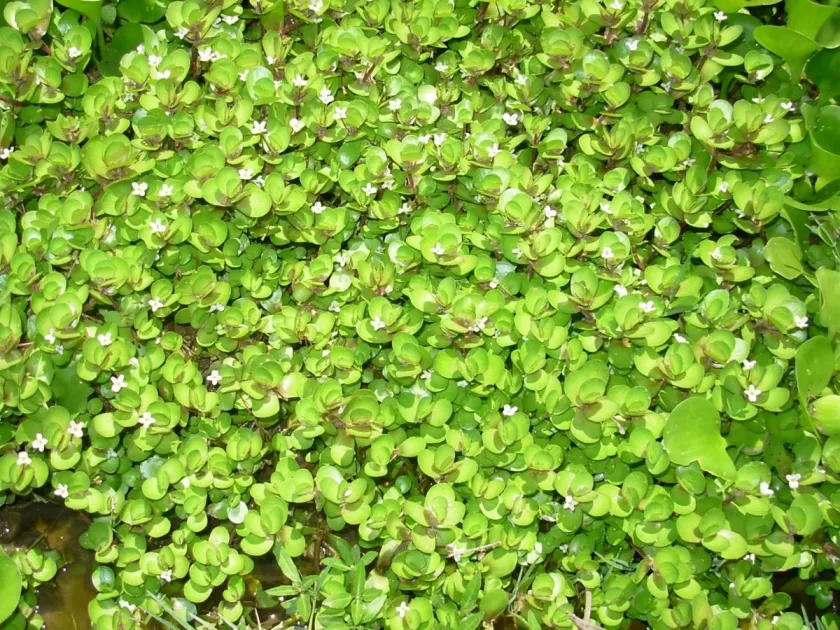
Description
Growing requirements
Bacopa repens is a perennial herbaceous plant classified within the Plantaginaceae family. Originally native to the tropical regions of the Americas, it is widely recognized for its versatility as both a submerged aquatic plant and a marginal wetland species.
The plant features distinct creeping stems that propagate by nodes, allowing it to form dense mats in favorable environments. Its leaves vary in texture and shape depending on whether the plant is grown in fully aquatic or terrestrial conditions, displaying remarkable physiological plasticity.
Regarding climatic requirements, this species thrives in tropical temperatures between 22 and 28 degrees Celsius. It is highly sensitive to cold spells and frost, which necessitates cultivation in greenhouses, indoor settings, or tropical outdoor garden ponds.
Soil quality is paramount for optimal development. The plant requires a nutrient-rich, slightly acidic substrate that allows for easy root penetration. When grown in artificial aquatic environments, supplementing the water with carbon dioxide and appropriate fertilizers is essential for maintaining vibrant growth.
Maintenance involves routine pruning to encourage lateral branching and prevent the stems from becoming sparse. Propagating Bacopa repens is straightforward through stem cuttings, which root easily when placed in damp substrate or directly into the water column.
Main diseases and pests
The primary threats to Bacopa repens involve the rapid proliferation of algae, which can outcompete the plant for light and nutrients. Keeping the water clean and maintaining proper flow are essential strategies to prevent algal blooms from smothering the crop.
In greenhouse settings, pests such as spider mites and aphids are the most common concern. These insects typically target the foliage when humidity levels are inadequate or when the plant is under environmental stress, requiring prompt pest management interventions.
Fungal pathogens and bacterial rot can affect the plant if the environment becomes stagnant or overly saturated without proper aeration. Maintaining high-quality water and ensuring sufficient air circulation are the best defensive measures against such diseases.
Nutrient deficiencies, particularly iron or magnesium, are common stressors that manifest as chlorosis. Providing a balanced, micronutrient-enriched fertilization program is necessary to ensure the plant retains its deep green coloration and structural integrity.
Incompatible water chemistry, such as high salt concentration or extreme hardness, can negatively impact growth and lead to stunted development. Regular testing of the cultivation environment is highly recommended to prevent metabolic decline in the plant population.