
Bacopa australis
Bacopa australis
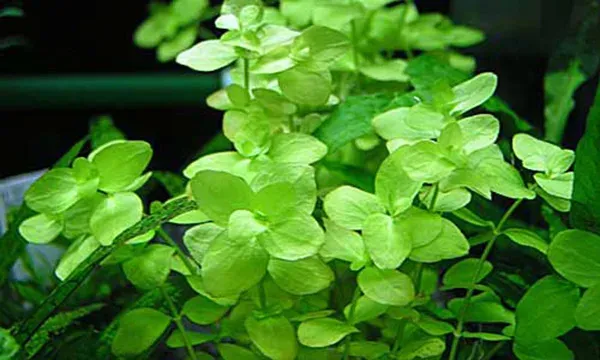
Description
Sowing dates
Bacopa australis is a perennial herb belonging to the Plantaginaceae family. Originally from South America, specifically regions in Brazil and Argentina, this species is well-adapted to freshwater environments such as riverbanks and shallow wetlands.
The plant is categorized as a hydrophyte, exhibiting high morphological plasticity. It can grow in a fully submerged, emersed, or semi-aquatic state, forming dense, bright green clusters that are highly sought after in aquatic landscaping.
Botanically, it features succulent, creeping stems with opposite leaves. When exposed to high light intensity, the foliage may develop attractive pinkish hues at the edges, which is a key aesthetic characteristic for plant collectors.
Propagation is primarily achieved through vegetative cuttings. The stems possess high regenerative potential, allowing them to form roots quickly at the nodes when placed in a nutrient-rich substrate under appropriate environmental conditions.
The primary use of Bacopa australis is ornamental. It is widely utilized in professional aquascaping to create "bushy" foreground or mid-ground layouts, serving as a staple plant for aquatic botanical collections globally.
Growing requirements
Bacopa australis thrives in a temperature range of 20°C to 28°C. While it is relatively resilient, maintaining stable temperatures helps ensure consistent growth rates and prevents metabolic stress during seasonal transitions.
Lighting is the most significant factor in its cultivation. High-intensity light is required to prevent the stems from stretching and becoming leggy; sufficient photon flux density ensures compact growth and vibrant leaf coloration.
The substrate should be fine-grained and nutrient-dense, ideally consisting of specialized aquarium soil or sand enriched with organic components. Proper nutrient availability in the root zone is crucial for sustaining the plant's health.
Water chemistry plays a vital role in nutrient uptake. A pH level between 6.0 and 7.5 is ideal, along with soft to medium water hardness. Regular supplementation of iron and CO2 is often necessary to maximize biomass production.
Water quality management requires efficient filtration and regular partial water changes. These maintenance practices prevent the accumulation of organic waste, which could otherwise inhibit the plant's growth and compromise the equilibrium of the ecosystem.
Main diseases and pests
The most common threat to the plant's health is the competition from various algae species. Algal blooms, such as green spot or thread algae, can overwhelm the foliage, significantly reducing the plant's ability to photosynthesize.
Nutrient deficiencies, particularly regarding nitrogen, phosphorus, and potassium, lead to stunted growth. Chlorosis, characterized by leaf yellowing, serves as an early indicator of mineral imbalance that requires immediate corrective fertilization.
Pests such as certain aquatic snails can cause physical damage to the soft apical buds of the plant. Monitoring and manual removal are standard practices to keep populations of these organisms within manageable levels.
Inadequate water circulation can lead to "stem melt" or basal decay. This issue typically arises in areas with low oxygen levels or high concentrations of decaying organic matter at the base of the plant clusters.
Disease prevention is managed through proactive system maintenance. Ensuring proper plant spacing, maintaining stable water chemistry, and providing optimal light levels create a robust environment where Bacopa australis can remain healthy and resistant to pathogens.