
Bacopa crenata
Bacopa crenata
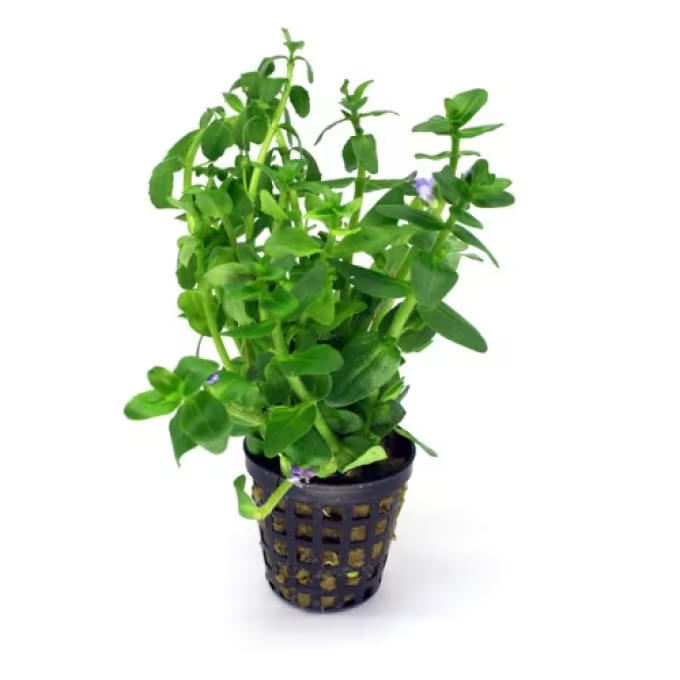
Description
Growing requirements
Bacopa crenata is a perennial herbaceous plant belonging to the Plantaginaceae family. Originally from tropical Africa, it is commonly found in marshy areas, along river banks, and in shallow standing water, demonstrating high adaptability to aquatic environments.
The plant features creeping stems and distinct crenated leaves, from which its name is derived. It grows rapidly under favorable conditions, forming dense carpets or vertical stems depending on whether it is grown as a marginal plant or submerged.
Optimal growth requires a warm climate with temperatures consistently between 20°C and 28°C. Being a tropical species, it does not tolerate cold drafts or sudden temperature drops, which can lead to leaf yellowing and stem dieback.
Soil or substrate requirements include a nutrient-rich, moist medium with a neutral to slightly acidic pH level. When cultivated in containers or aquariums, it thrives in well-aerated substrates that allow roots to absorb nutrients efficiently without decaying.
Adequate lighting is essential for maintaining the plant's health and aesthetic appeal. Providing 8 to 12 hours of medium-to-high intensity light ensures compact internodes and vibrant green coloration of the foliage.
Main diseases and pests
Fungal diseases are the primary threat to Bacopa crenata, particularly in stagnant environments with poor air circulation. Overwatering or lack of proper ventilation creates conditions conducive to root rot and stem decay, which can spread quickly.
Pests such as aphids and spider mites may target the plant when it is grown in greenhouse conditions. These insects extract sap from the leaves, causing them to wilt or curl, which significantly degrades the plant's overall appearance and health.
Integrated pest management, including physical removal or the use of gentle botanical soaps, is recommended over the application of heavy chemical pesticides. Bacopa crenata is sensitive to many common garden chemicals that can damage its delicate tissue.
Nutrient deficiency often manifests as yellowing leaves or stunted growth, indicating a need for balanced liquid fertilizers. Maintaining a consistent mineral profile in the water or soil is critical for preventing stress-related disorders.
Regular maintenance, including the thinning of dense stems and the removal of decaying organic matter, helps reduce the pressure from pathogens. Keeping the plant in a clean, stable environment is the most effective strategy for disease prevention.