
Bacopa egensis
Bacopa egensis
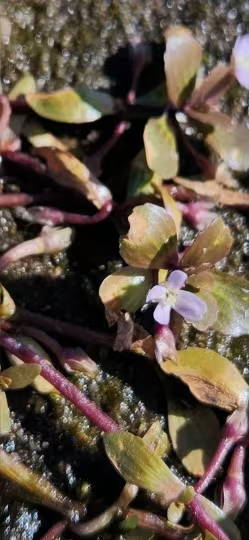
Description
Growing requirements
Bacopa egensis is a perennial herbaceous plant belonging to the Plantaginaceae family. Originally native to the tropical regions of South America, it primarily inhabits wet environments, marshes, and riverbanks where it can thrive in both terrestrial and aquatic states.
The plant features succulent, rounded leaves arranged in opposite pairs along its stem. Its morphology makes it highly adaptable to submerged cultivation, which has made it a popular choice for aquascaping and specialized botanical collections worldwide.
High light intensity is essential for maintaining a compact growth habit. In low-light conditions, the internodes of the stem tend to elongate significantly, resulting in a sparse appearance that is less desirable for commercial or decorative purposes.
The ideal cultivation environment requires water temperatures ranging from 22 to 28 degrees Celsius. The species thrives in slightly acidic to neutral water, and it is sensitive to drastic shifts in water chemistry, which can lead to rapid wilting or leaf drop.
Soil and substrate quality are critical for the long-term health of the plant. A nutrient-rich substrate combined with CO2 supplementation significantly enhances the growth rate, leading to lush, dense clusters that improve the overall ecosystem balance.
Main diseases and pests
Environmental instability is the primary threat to the health of Bacopa egensis. Fluctuations in water parameters often cause physiological stress, resulting in stunted growth and necrosis of the older leaves.
Algal blooms pose a significant risk as they compete for light and nutrients. Once algae coat the leaf surface, the plant's ability to perform photosynthesis is severely compromised, often leading to total colony failure.
Iron deficiency is a common nutritional disorder in this species, characterized by chlorosis. When leaves begin to yellow, the plant loses its structural integrity and becomes susceptible to further degradation.
Inadequate water circulation can lead to the accumulation of waste products around the root zone, which promotes the growth of harmful bacteria and fungi that may attack the stem tissue.
Cold stress remains a constant danger; exposure to temperatures below the optimal range slows down metabolic activity and compromises the plant's natural defenses against pathogens.