
Bacopa eisenii
Bacopa eisenii
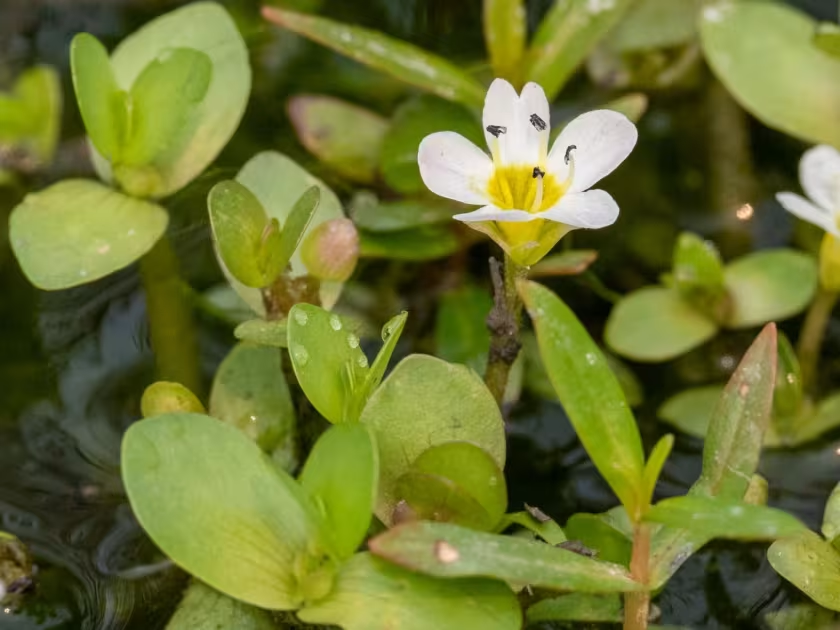
Description
Growing requirements
Bacopa eisenii is a distinct perennial plant belonging to the Plantaginaceae family. Native to the western regions of North America, it thrives in wetland environments, ranging from muddy banks to submerged aquatic habitats.
The plant exhibits a creeping growth habit with succulent, opposite leaves. Its stems are highly nodes-capable, allowing the plant to spread horizontally across the substrate, creating a lush green carpet effect.
For successful cultivation, Bacopa eisenii requires high light intensity. When grown in aquatic conditions, providing supplemental light and CO2 injection will significantly improve growth rate and leaf density.
The substrate should be rich in organic nutrients, such as silt or nutrient-dense aquatic soil. Consistency in moisture levels is paramount, as the plant does not tolerate prolonged dryness of the root system.
Optimal temperature for growth ranges between 20°C and 28°C. While it is adaptable to various water parameters, keeping the pH slightly acidic to neutral creates the most favorable environment for nutrient absorption.
Main diseases and pests
Fungal rot is the primary threat to Bacopa eisenii, often triggered by poor water circulation and stagnant conditions. Removing decaying plant matter is essential to maintain a healthy ecosystem.
Algal blooms pose a significant competitive risk, as aggressive algae can quickly cover the leaves, inhibiting photosynthesis. Balanced nutrient dosing is necessary to keep algae growth under control.
In greenhouse settings, spider mites and aphids can become problematic during drier spells. Maintaining high ambient humidity is the most effective biological method to discourage these pests.
Sensitivity to mineral imbalances, specifically high water hardness, can cause stunted growth and curled leaves. Regular monitoring of the water quality ensures the plants maintain their vibrant appearance.
Improper pruning techniques can also lead to stem weakness. Regular trimming encourages lateral branching, which ensures the plant remains compact and healthy rather than becoming leggy and prone to stem breakage.