
Bacopa erecta
Bacopa erecta
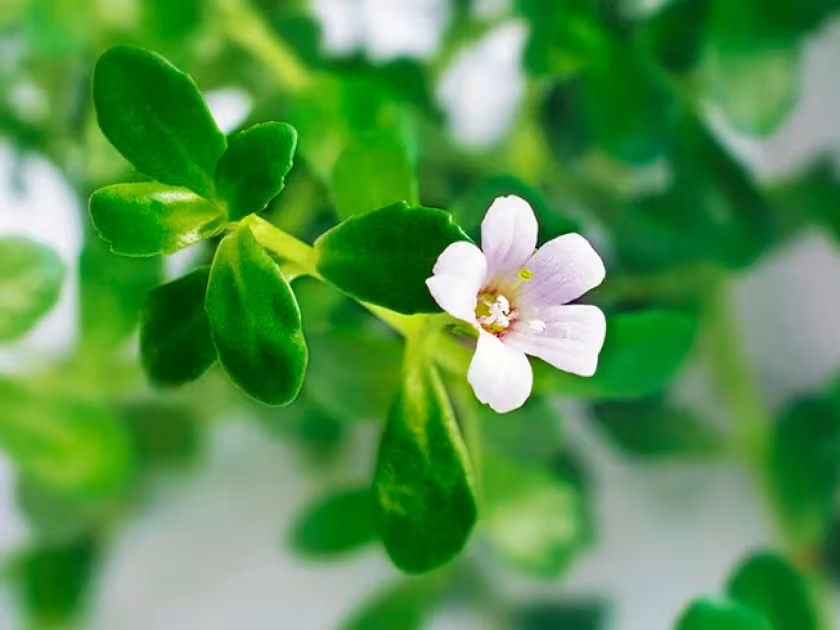
Description
Sowing dates
Sowing of Bacopa erecta is primarily conducted using seedling methods in late winter or early spring. The seeds are extremely small, requiring surface sowing on moist substrate without being covered by soil.
Successful germination requires high humidity and a stable ambient temperature between 20 and 22 degrees Celsius. Seed containers should be covered with clear plastic to maintain a greenhouse-like environment.
Seedlings are pricked out once the first pair of true leaves emerges. Regular watering is vital, as substrate desiccation severely impairs plant development and overall viability during the early stages.
Transplanting to open ground or permanent containers is performed only after the risk of night frost has completely passed. The ideal time for planting is the second half of May.
In large-scale production, vegetative propagation via cuttings is frequently used. This method helps maintain specific cultivar traits and significantly accelerates the production of biomass for commercial purposes.
Growing requirements
Bacopa erecta belongs to the Plantaginaceae family and is a typical hygrophyte, preferring moist, boggy habitats. The crop is highly demanding regarding consistent water availability.
The plant thrives in intense sunlight but can tolerate partial shade. Under high light conditions, stems become denser and more robust, which is beneficial for plant health.
The soil must be fertile, rich in organic matter, and kept constantly moist. As the species naturally grows along water bodies, maintaining a high level of substrate moisture is non-negotiable.
Moderate temperatures are preferred for growth. Bacopa reacts poorly to sudden temperature fluctuations and dry air, necessitating stable environmental controls for successful cultivation.
A neutral to slightly acidic soil pH is required. Good drainage is essential to prevent water stagnation in the root zone if the plant is grown in pots as a decorative or ornamental specimen.
Yield
The yield of Bacopa erecta as an agricultural crop is assessed by the volume of vegetative biomass suitable for pharmaceutical or ornamental use.
Under optimal growing conditions, the plant rapidly builds biomass, creating a dense carpet of stems and leaves. Maximum productivity is achieved through regular fertilization with complex mineral nutrients.
Operational efficiency depends on planting density; typically, 10 to 12 plants per square meter are placed to ensure proper nutrition and adequate access to light for each individual plant.
For medicinal purposes, harvesting is performed during the active flowering phase, when the concentration of bioactive compounds in the aerial parts of the plant is at its peak.
Harvesting involves carefully cutting the stems while leaving enough material for regrowth, which allows for multiple harvest cycles within a single growing season.
Main diseases and pests
The main threat to the crop is low humidity, which triggers spider mite infestations. The pest rapidly reproduces, draining sap from the leaves and causing yellowing and stem deformation.
Poor ventilation combined with stagnant water makes the plant susceptible to fungal diseases like gray mold. This pathogen causes lesions on stems and leaves, leading to tissue necrosis.
Aphids are frequent pests that damage young growth points and buds. Biological or chemical insecticides, approved for use on medicinal or ornamental crops, are employed for control.
Micronutrient deficiencies, particularly iron, often manifest as chlorosis. The leaves lose their deep green color and turn pale, which significantly diminishes the crop's market value.
- Spider mites caused by dry air conditions.
- Aphids damaging young succulent shoots.
- Gray mold due to excessive moisture and poor airflow.
- Chlorosis resulting from nutrient deficiencies.
Harvesting
Medicinal raw material harvesting is conducted in the early morning once dew has dissipated but while the plant still maintains high turgor, ensuring better quality and compound preservation.
Harvested material must be transported to the drying area immediately. It should not be left in direct sunlight, as UV radiation degrades sensitive bioactive chemical compounds.
Drying is performed in well-ventilated rooms at temperatures not exceeding 40 degrees Celsius to maintain the integrity of the plant's active constituents.
After drying, the material is processed and packed into airtight containers that prevent moisture and light penetration, which is critical for long-term shelf stability.
Properly dried material should possess a characteristic aroma and maintain its natural leaf color, serving as a primary indicator of product quality.