
Bacopa innominata
Bacopa innominata
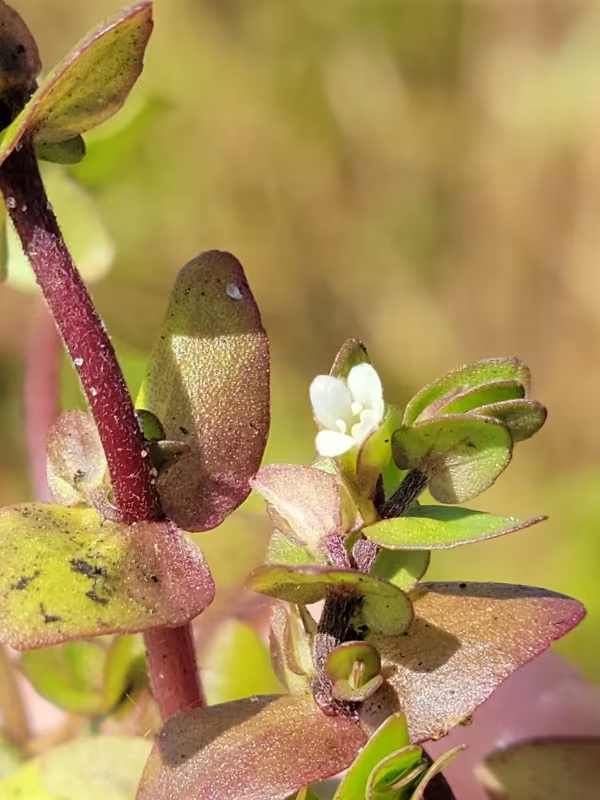
Description
Growing requirements
Bacopa innominata is a perennial herbaceous plant belonging to the Plantaginaceae family. It is widely recognized for its amphibious nature, thriving in both saturated terrestrial habitats and fully submerged aquatic environments.
Native to tropical and subtropical regions of the Americas, this species typically inhabits wet marshes, pond edges, and slow-moving streams. Its natural distribution demonstrates a high preference for constant hydration.
The cultural requirements include high light intensity, which is critical for maintaining compact growth and vibrant leaf color. In low-light conditions, the stems tend to become elongated and leggy.
Soil management for this plant involves using rich, slightly acidic to neutral substrates. When potted or grown in landscaping, the soil must be kept constantly damp, simulating its natural wetland habitat.
Temperature control is essential, with an ideal range between 20°C and 28°C. The plant exhibits stunted growth if temperatures drop significantly, and it lacks frost resistance, making it suitable only for warm climates or indoor cultivation.
Main diseases and pests
Common pests affecting Bacopa innominata include spider mites and aphids, which are particularly prevalent in dry conditions or poorly ventilated indoor greenhouses.
Fungal issues, such as root rot or powdery mildew, can occur if the plant is subjected to poor air circulation combined with overly stagnant water conditions.
Effective management strategies include maintaining proper spacing between individual plants to allow for airflow and preventing the buildup of algae on the foliage.
The use of integrated pest management (IPM) is highly recommended, prioritizing biological controls over harsh chemical interventions to preserve the health of the ecosystem.
Regular monitoring of leaves for discoloration or spotting is vital, as early detection allows for the prompt removal of affected areas before a full-scale infestation develops.