
Bacopa stricta
Bacopa stricta
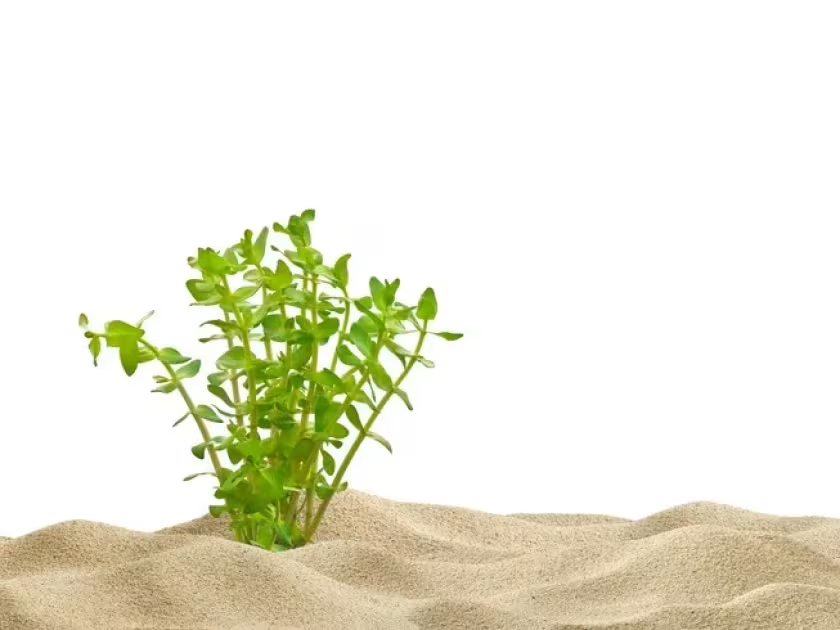
Description
Sowing dates
Bacopa stricta is a perennial aquatic plant belonging to the Plantaginaceae family, commonly cultivated in aquaculture and aquascaping environments.
The primary method of propagation is vegetative, utilizing stem cuttings taken from healthy, fast-growing parent plants to ensure rapid development.
Cuttings should be approximately 10–15 cm in length and are inserted into a nutrient-rich substrate, which provides the necessary support for root initiation.
The propagation process is most efficient during the spring and summer months when daylight intensity naturally promotes vigorous biological activity.
In specialized cultivation facilities, growers use controlled aquatic conditions to maximize the production of new stems from established mother plants.
Growing requirements
Optimal growth of Bacopa stricta necessitates high-intensity lighting, which is essential for maintaining a compact structure and preventing leaf chlorosis.
The ideal temperature for this species ranges between 22 and 28 degrees Celsius, supporting steady metabolic processes and overall plant health.
The substrate should be rich in minerals and slightly acidic to neutral in pH, allowing the roots to absorb essential nutrients effectively.
Supplemental carbon dioxide injection and the administration of iron-based fertilizers significantly improve the color and density of the foliage.
Maintaining stable water quality through efficient filtration is crucial to preventing the buildup of organic matter that can inhibit root respiration.
Yield
Yield in Bacopa stricta is measured by the biomass accumulation rate, which is heavily dependent on the quality of light and nutrient availability.
Under optimal conditions, the plant displays a rapid growth rate, allowing for regular harvesting of stem segments on a monthly or bi-monthly cycle.
High-density planting systems can yield significant biomass, provided that adequate circulation is maintained to ensure uniform growth across the beds.
Automated fertigation systems play a key role in maximizing yield by delivering precise nutrient dosages, thus avoiding deficiencies that slow growth.
Consistent maintenance of the aquatic environment ensures that the mother plants remain productive for extended periods, maximizing the return on investment.
Main diseases and pests
Algal blooms pose the greatest threat to this crop, as filamentous algae can rapidly coat stems, blocking light and stifling gas exchange.
In high-humidity terrestrial or emersed setups, fungal pathogens may manifest as localized rot on the leaf edges if air circulation is poor.
Herbivorous invertebrates, such as certain species of snails, can cause significant cosmetic damage by feeding on tender apical shoots.
Imbalanced water chemistry, particularly fluctuations in nitrate and phosphate levels, can lead to stunted growth and increased susceptibility to disease.
Poor water movement leads to the accumulation of waste products, which can cause stem necrosis and overall decline in the health of the culture.
Harvesting
Harvesting involves the selective pruning of healthy stems, using sterile tools to minimize the risk of introducing pathogens to the system.
Post-harvest, the cuttings must be maintained in a humid environment or appropriate nutrient solution to preserve their viability for sale or replanting.
Grading is performed based on stem length and foliage quality, ensuring that only robust material is prepared for final distribution or further propagation.
Parent plants are left in place to continue producing lateral shoots, ensuring a continuous supply of material for subsequent harvest cycles.
Consistent pruning during harvest is essential for maintaining the aesthetic and biological vigor of the stand, preventing overcrowded conditions.