
Bacopa salzmannii
Bacopa salzmannii
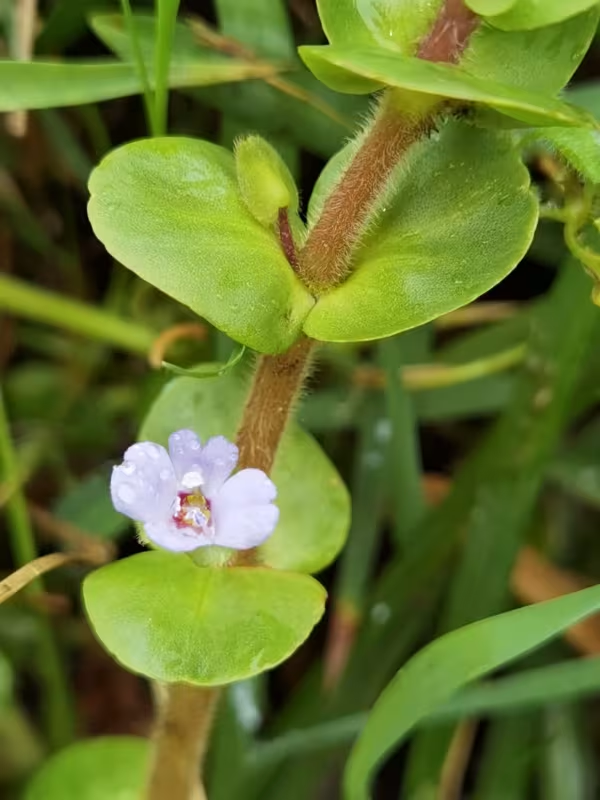
Description
Sowing dates
Propagation of Bacopa salzmannii is primarily achieved through stem cuttings in an aquatic or paludarium setting. As the plant does not typically produce seeds under standard aquarium conditions, vegetative reproduction remains the most effective method for expansion.
To propagate, select healthy stem cuttings approximately 10 to 15 centimeters long. It is essential to remove the lower leaves before planting, ensuring that the bare stem node is securely buried in the nutrient-rich substrate to facilitate rapid root development.
The ideal time for propagation is during the peak growing season when light cycles are long and stable. This period ensures that the newly planted cuttings have sufficient energy to establish a robust root system before seasonal changes in water parameters occur.
Spacing between cuttings should be maintained to prevent overcrowding and shading of the lower leaves. Adequate circulation of water around the stems helps prevent fungal issues and ensures uniform growth across the entire planted area.
Success in rooting is highly dependent on the quality of the substrate and stable temperatures. Once established, the plant begins to show significant vertical growth and will eventually produce lateral shoots that can be used for further propagation.
Growing requirements
Bacopa salzmannii requires specific environmental conditions to thrive, particularly regarding water quality and light intensity. It prefers soft to medium-hard water with a pH level consistently maintained between 6.0 and 7.2 for optimal health.
Temperature management is critical, with a preferred range of 22 to 28 degrees Celsius. Keeping the water within these limits ensures metabolic stability and prevents the loss of the plant's characteristic reddish-brown coloration.
High-intensity lighting is non-negotiable for this species. To achieve the best coloration and compact growth, it is recommended to provide high-quality lighting at a level of at least 0.5 to 0.8 watts per liter, complemented by long daily photoperiods.
A nutrient-rich substrate is essential as the plant draws a significant portion of its resources through its root system. Supplementing the soil with iron and essential microelements is vital to prevent leaf chlorosis and maintain vibrant colors.
Carbon dioxide injection is highly beneficial and often necessary for keeping Bacopa salzmannii in its best form. Providing CO2 boosts growth rates significantly and helps the plant maintain its structural integrity under intense lighting conditions.
Main diseases and pests
The most significant threat to Bacopa salzmannii is the rapid proliferation of algae, which can easily overtake the plant. Maintaining a strict balance of nutrients and light is essential to keep algae from covering the delicate leaves and inhibiting growth.
Nutrient deficiencies, particularly regarding iron and phosphorus, often manifest as severe chlorosis or stunted growth. If left unaddressed, these conditions weaken the plant's structure, making it highly susceptible to secondary bacterial infections.
Stem rot can occur due to poor circulation or excessively high temperatures, leading to necrotic lesions along the main stalk. Promptly pruning the affected areas is necessary to halt the spread of tissue decay throughout the entire plant colony.
While the plant is generally hardy, sudden shifts in water chemistry can trigger leaf drop. This response is a physiological reaction to stress rather than a disease, but it requires stabilizing environmental parameters immediately to prevent long-term damage.
- Regular water quality testing and maintenance.
- Consistent fertilization with iron-rich supplements.
- Proper thinning to maintain water flow and light access.