
Bellardi's plantain
Plantago bellardii
Description
Growing requirements
Bellardi's plantain (Plantago bellardii) is an annual herbaceous plant belonging to the Plantaginaceae family. Unlike many other species within the genus, this plant is specifically adapted to survive in arid and challenging environmental conditions.
The native distribution area includes the Mediterranean region, extending across Southern Europe, North Africa, and parts of the Middle East. It thrives in open, sun-drenched locations such as stony slopes, dry pastures, and sandy soils.
The primary requirement for successful growth is a well-drained substrate with a neutral to slightly alkaline pH level. The species is highly sensitive to waterlogging, as excess moisture in the root zone can lead to rapid fungal rot and plant death.
Bellardi's plantain is a true xerophyte, showcasing remarkable resilience against drought and high solar radiation. It successfully populates nutrient-poor soils where other botanical species often struggle to establish or compete effectively.
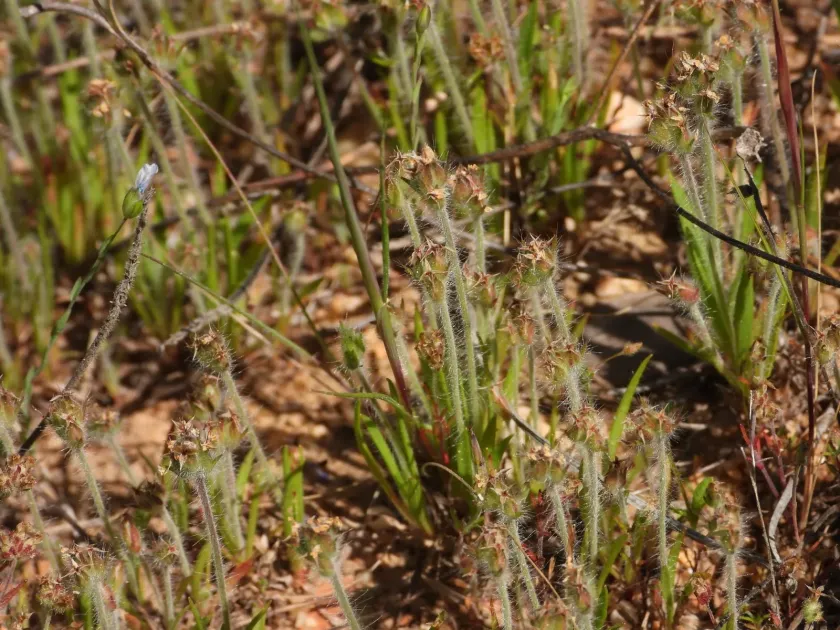
Botanically, the plant is characterized by a pubescent stem and narrow lanceolate leaves that form a distinct basal rosette. Its inflorescence is a dense, spike-like structure that develops during the spring months, marking the peak of its vegetative cycle.
Main diseases and pests
Bellardi's plantain can be susceptible to fungal infections during periods of unseasonable spring rainfall. Powdery mildew is the most common issue, appearing as a white film on leaf surfaces and inhibiting the plant's ability to photosynthesize effectively.
Among various pests, weevils represent the primary threat, often feeding on the succulent tissues of young foliage. Furthermore, seeds can be targeted by specific insect larvae, which occasionally impact the reproductive success of local populations.
As this species is not typically grown as a commercial crop, there are no specific chemical protection protocols established for its cultivation. Management relies primarily on cultural practices, such as maintaining appropriate soil moisture and spacing.
Root rot is typically associated with poor horticultural practices, particularly when the plant is exposed to dense, clay-heavy soils. The best prevention involves site selection focused on excellent natural drainage to avoid moisture accumulation.
In wild habitats, populations are frequently threatened by overgrazing from livestock. The young, tender shoots of the plant are highly palatable to sheep and goats, which can significantly reduce the local density of the species during the growing season.