
Bacopa myriophylloides
Bacopa myriophylloides
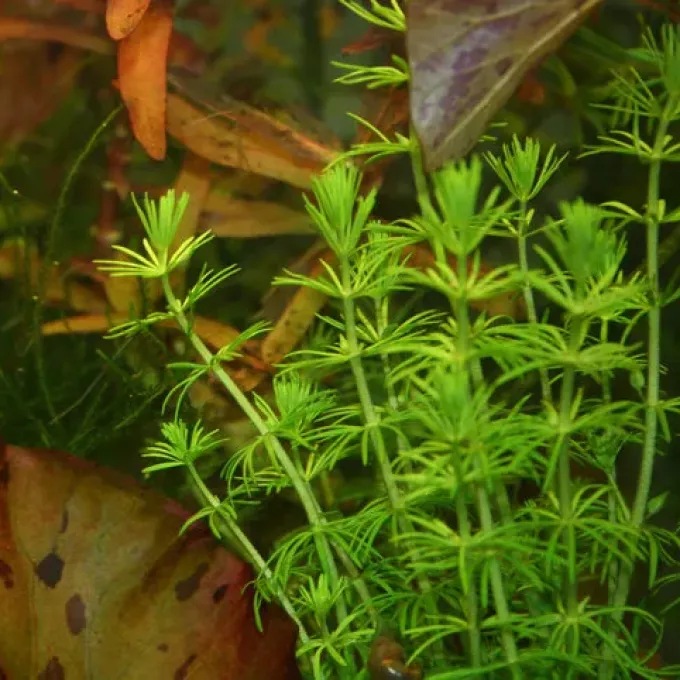
Description
Growing requirements
Bacopa myriophylloides is an aquatic plant belonging to the Plantaginaceae family. Native to South America, specifically Brazil, it is typically found in shallow water habitats or on damp, muddy banks, which allows it to thrive in both submerged and emerged states.
The plant is characterized by its thin, delicate stems densely covered with narrow, needle-like leaves, giving it a soft, feathery appearance. This unique foliage makes it a prized specimen for aquarists looking for distinct textures in their underwater landscapes.
Successful cultivation requires high-intensity lighting and the supplemental injection of carbon dioxide. Without sufficient light and CO2, the plant tends to lose its lower leaves and growth rate significantly decreases. It prefers water temperatures between 22 and 26 degrees Celsius.
Regarding substrate, this species performs best when planted in a nutrient-rich, fine-grained aquarium soil. A steady supply of micronutrients, particularly iron, is necessary to prevent yellowing of the leaves and to maintain the plant's vibrant green appearance.
In terms of practical use, Bacopa myriophylloides is primarily utilized in ornamental aquarium gardening. It serves as an excellent mid-ground or background plant, often grouped together to create thick, lush curtains of greenery that mimic natural river vegetation.
Main diseases and pests
The primary threats to this plant are various forms of algae, such as thread algae, which can easily entangle the fine leaves and suffocate the plant. Maintaining consistent water quality and regular pruning of affected parts are essential practices to ensure healthy growth.