
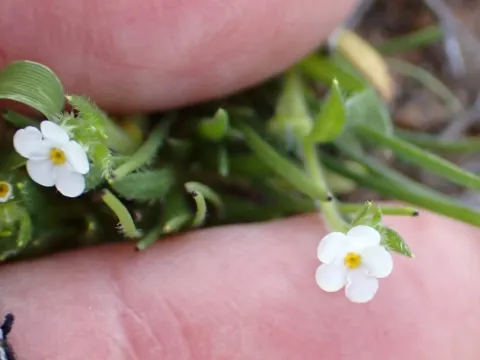
Plagiobothrys
Plagiobothrys
Sowing Plagiobothrys seeds is best performed during the early spring once the soil temperature has risen sufficiently to trigger rapid germination.
What the section contains
 Austin's popcornflower
Plagiobothrys austiniae
Austin's popcornflower
Plagiobothrys austiniae
 Bracted popcornflower
Plagiobothrys bracteatus
Bracted popcornflower
Plagiobothrys bracteatus
 Greene's popcornflower
Plagiobothrys greenei
Greene's popcornflower
Plagiobothrys greenei
 Oriental popcornflower
Plagiobothrys orientalis
Oriental popcornflower
Plagiobothrys orientalis
 Plagiobothrys
 infectivus
Plagiobothrys
Plagiobothrys infectivus
 Plagiobothrys acanthocarpus
Plagiobothrys australasicus
Plagiobothrys australasicus
Plagiobothrys acanthocarpus
Plagiobothrys acanthocarpus
Plagiobothrys australasicus
Plagiobothrys australasicus
 Plagiobothrys chorisianus
Plagiobothrys chorisianus
Plagiobothrys chorisianus
 Plagiobothrys collinus
Plagiobothrys collinus
Plagiobothrys collinus
 Plagiobothrys figuratus
Plagiobothrys glaber
Plagiobothrys glaber
Plagiobothrys figuratus
Plagiobothrys figuratus
Plagiobothrys glaber
Plagiobothrys glaber
 Plagiobothrys glomeratus
Plagiobothrys glomeratus
Plagiobothrys glomeratus
 Plagiobothrys glyptocarpus
Plagiobothrys glyptocarpus
Plagiobothrys glyptocarpus
 Plagiobothrys humistratus
Plagiobothrys humistratus
Plagiobothrys humistratus
 Plagiobothrys hystriculus
Plagiobothrys hystriculus
Plagiobothrys hystriculus
 Plagiobothrys jonesii
Plagiobothrys jonesii
Plagiobothrys jonesii
 Plagiobothrys kingii
Plagiobothrys kingii
Plagiobothrys kingii
 Plagiobothrys lamprocarpus
Plagiobothrys lamprocarpus
Plagiobothrys lamprocarpus
 Plagiobothrys leptocladus
Plagiobothrys leptocladus
Plagiobothrys leptocladus
 Plagiobothrys lithocaryus
Plagiobothrys lithocaryus
Plagiobothrys lithocaryus
 Plagiobothrys mollis
Plagiobothrys mollis
Plagiobothrys mollis
 Plagiobothrys myosotoides
Plagiobothrys myosotoides
Plagiobothrys myosotoides
 Plagiobothrys nothofulvus
Plagiobothrys nothofulvus
Plagiobothrys nothofulvus
 Plagiobothrys parishii
Plagiobothrys parishii
Plagiobothrys parishii
 Plagiobothrys pringlei
Plagiobothrys pringlei
Plagiobothrys pringlei
 Plagiobothrys scouleri
Plagiobothrys scouleri
Plagiobothrys scouleri
 Plagiobothrys scriptus
Plagiobothrys scriptus
Plagiobothrys scriptus
 Plagiobothrys tener
Plagiobothrys tener
Plagiobothrys tener
 Plagiobothrys torreyi
Plagiobothrys trachycarpus
Plagiobothrys trachycarpus
Plagiobothrys torreyi
Plagiobothrys torreyi
Plagiobothrys trachycarpus
Plagiobothrys trachycarpus
 Plagiobothrys uncinatus
Plagiobothrys uncinatus
Plagiobothrys uncinatus
 Popcorn flower
Plagiobothrys canescens
Popcorn flower
Plagiobothrys canescens
 Reticulate popcornflower
Plagiobothrys reticulatus
Rough popcornflower
Plagiobothrys hirtus
Reticulate popcornflower
Plagiobothrys reticulatus
Rough popcornflower
Plagiobothrys hirtus
 Rusty popcornflower
Plagiobothrys fulvus
Rusty popcornflower
Plagiobothrys fulvus
 Salt-marsh popcornflower
Plagiobothrys salsus
Salt-marsh popcornflower
Plagiobothrys salsus
 Slender popcornflower
Plagiobothrys tenellus
Slender popcornflower
Plagiobothrys tenellus
 Stalked popcornflower
Plagiobothrys stipitatus
Stalked popcornflower
Plagiobothrys stipitatus
Plagiobothrys
In regions with mild winters, autumn sowing is an effective strategy that allows for earlier development as the plant acclimates to the environment.
Seeds should be sown at a shallow depth of approximately 0.5 to 1 centimeter, ensuring they receive enough light, which is crucial for early stages of development.
Preparation of the seedbed is essential: the soil must be fine-textured, well-draining, and completely cleared of perennial weeds that could stifle seedlings.
Optimal spacing should be maintained during sowing to promote air circulation, which prevents the development of fungal diseases that often thrive in damp, crowded spots.
Plagiobothrys belongs to the Boraginaceae family and thrives in open, sunny locations where it can reach its full developmental potential.
The ideal soil is light, sandy, or loamy, possessing excellent drainage capabilities to ensure the roots do not sit in stagnant water.
The plant demonstrates a strong preference for moderate temperatures between 15 and 22 degrees Celsius, making it suitable for temperate climates.
While the plant is relatively drought-tolerant once established, regular irrigation during the flowering phase is necessary to ensure consistent growth and vigor.
Maintenance involves providing adequate organic matter or balanced fertilizers early in the season to support the high nutritional requirements of the plant.
The productivity of Plagiobothrys is primarily observed through the formation of dense, healthy foliage and the abundance of its characteristic blooms.
Proper agronomic management, including timely thinning and weed control, directly influences the uniformity and quality of the vegetative cover formed.
The plant has a natural tendency to self-seed, which significantly contributes to its overall persistence and expansion within a managed cultivation area.
Seed harvest efficiency depends on timing; collecting seeds when capsules begin to brown ensures high-quality material for subsequent planting cycles.
Overall, the plant provides a sustainable aesthetic value and can be integrated into various landscape designs, acting as a reliable and hardy groundcover.
The primary threats to Plagiobothrys include fungal pathogens such as powdery mildew, which are often exacerbated by poor air circulation and excessive humidity.
Aphids and spider mites are the most common pests that affect this crop, feeding on the foliage and potentially reducing the plant's overall health and aesthetic appeal.
Preventative measures include maintaining clear planting rows and monitoring for early signs of infestation to implement control before significant damage occurs.
Fungicidal applications may be required in high-humidity seasons, although these should be used judiciously to avoid disrupting the local ecosystem.
Keeping the area free of debris and dead plant matter is an effective way to reduce the overwintering potential of pathogens and pests within the soil.
Harvesting for seed production involves cutting the stalks when the capsules are mature but before they naturally shatter and disperse their contents.
Once collected, the material must be dried in a sheltered, well-ventilated area to reduce moisture content and prevent the growth of mold or decay.
Threshing and cleaning steps are necessary to separate the viable seeds from chaff, ensuring that the harvested material is clean and ready for storage.
Storing seeds in cool, dry conditions with stable temperatures will maintain their viability for extended periods until the next sowing season begins.
By following these harvest protocols, cultivators can ensure a consistent and high-quality supply of seeds for continuous cultivation of the species.