
Plagiobothrys pringlei
Plagiobothrys pringlei
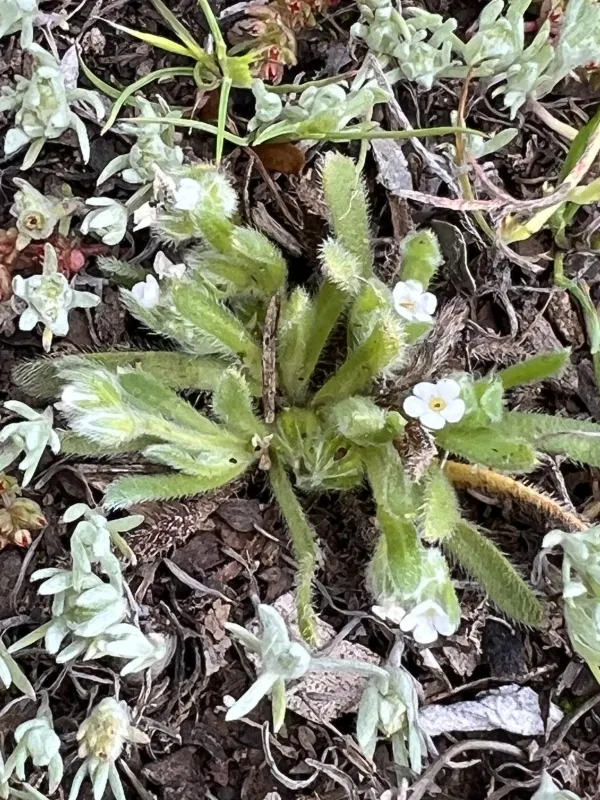
Description
Sowing dates
Plagiobothrys pringlei belongs to the Boraginaceae family and is known for its distinct lifecycle adapted to specific environmental niches. This species requires careful handling during the propagation phase to ensure high germination rates.
Sowing should ideally occur in the autumn to facilitate natural cold stratification, which is essential for breaking seed dormancy in this genus. Spring sowing is possible but requires artificial stratification in a cold environment.
Seeds are small and should be sown on the surface of a light, well-draining substrate. Covering them with a thin layer of grit or fine sand helps maintain moisture while allowing sufficient light for germination.
The germination period can be extended, and uneven emergence is a common trait of the species. Patience is required during the initial establishment phase, ensuring the substrate does not dry out completely.
Once seedlings have developed their true leaves, transplanting should be done with care to avoid root disturbance. The plants prefer to grow in groups to establish a microclimate conducive to their development.
Growing requirements
This species thrives in well-drained, sandy, or rocky soils that mirror its native habitat. Excellent drainage is the most critical factor, as stagnant water will inevitably lead to root rot and plant mortality.
Plagiobothrys pringlei is a sun-loving plant that requires full exposure to thrive. Sufficient light intensity is necessary to maintain the compact growth form and to promote optimal flower production.
Watering requirements are moderate. The plants are naturally drought-tolerant and are adapted to environments where water is available primarily during the cool, wet season. Watering should be reduced as the plant approaches dormancy.
Soil nutrient levels should remain relatively low. Excessive nitrogen will encourage foliage growth at the expense of floral development, potentially weakening the plant's structural integrity.
The ideal climatic conditions involve cool to moderate temperatures. While the plants are hardy, protecting them from extreme heat or constant moisture during the summer dormancy phase is recommended for long-term health.