
Pentaglottis
Pentaglottis
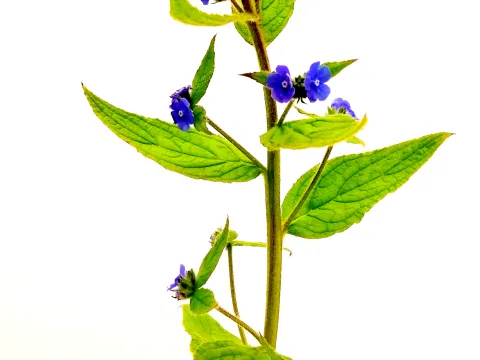
Pentaglottis, commonly known as Green Alkanet (Pentaglottis sempervirens), belongs to the Boraginaceae family. This perennial herb is recognized for its coarse, dark green leaves and clusters of bright blue star-shaped flowers that appear in spring.
What the section contains

Pentaglottis
Originating from Southwestern Europe, this plant is naturally adapted to woodland margins and moist, shady environments. Its distribution spans across regions with temperate maritime climates, making it well-suited for similar environments in cultivation.
Regarding site requirements, Pentaglottis thrives in partial shade. While it can tolerate deeper shade, its flowering potential and overall vigor are improved with access to filtered sunlight. It is essential to avoid sites exposed to harsh, scorching afternoon sun.
The plant prefers fertile, moist, and well-drained soil. It is particularly responsive to high levels of organic matter, which supports the development of a strong root system. Poorly drained soils must be improved with amendments or raised beds to prevent rot.
Agronomic management involves consistent moisture levels during the establishment phase. Once mature, the plant is relatively drought-tolerant, although supplementary watering during prolonged dry spells will maintain healthy foliage throughout the growing season.
The most common fungal issue affecting Pentaglottis is powdery mildew. This pathogen forms a white, dusty layer on the foliage, which reduces the plant's photosynthetic capacity and affects its ornamental appeal during the summer months.
Slugs and snails are the primary pests that target young, succulent leaves. These mollusks can cause significant defoliation, particularly in damp or humid weather, necessitating the use of traps or manual removal to protect young plants.
Gray mold (Botrytis) may develop in dense, overcrowded plantings where air circulation is restricted. This condition is often exacerbated by overhead irrigation, which keeps the foliage wet for extended periods, creating an ideal environment for the fungus.
Aphids can occasionally colonize the flower stalks, causing stunted growth and honeydew production. While usually not fatal to the plant, heavy infestations can reduce the quality of the blossoms and weaken the overall plant vigor.
Integrated pest management should focus on cultural practices such as spacing, proper sanitation of garden beds, and the encouragement of beneficial insects to manage pest populations naturally without heavy chemical reliance.