
Slender popcornflower
Plagiobothrys tenellus
Description
Growing requirements
The slender popcornflower (Plagiobothrys tenellus) is a herbaceous annual plant belonging to the Boraginaceae family. Native to western North America, this species is commonly found in open, sunny habitats such as grassy slopes and disturbed areas with well-draining soils.
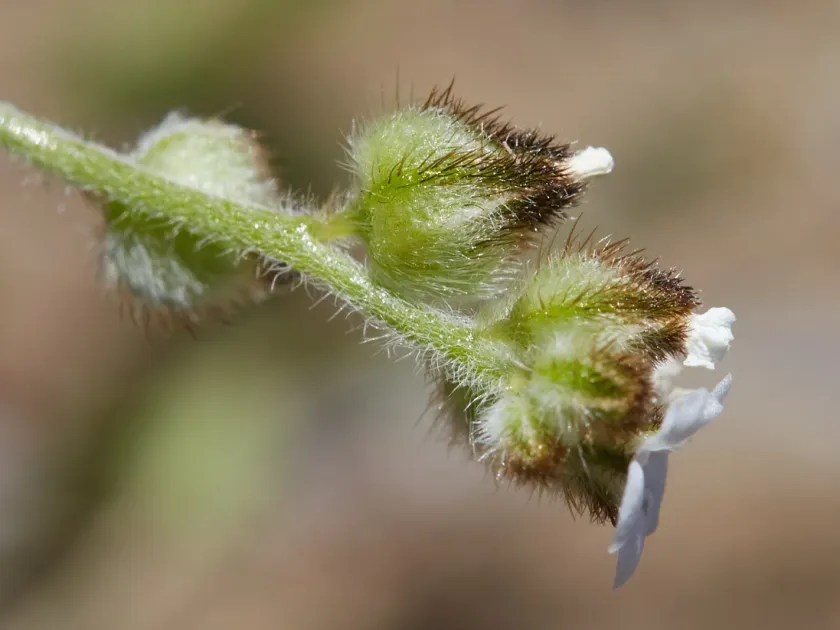
The plant exhibits a delicate yet resilient structure, typically reaching a height of 10 to 30 centimeters. Its foliage is characterized by narrow, lance-shaped leaves covered in fine hairs, which serve to reduce water loss and protect the plant from high levels of solar radiation during its growth cycle.
Success in cultivation requires soil with excellent drainage properties. While the plant is adapted to various soil types, including sandy and rocky substrates, it performs best in neutral to slightly acidic conditions. It cannot tolerate waterlogged soils, which invariably lead to root rot.
The agricultural management of this species is centered on site selection, specifically choosing areas with full sun exposure. It is an opportunistic plant that benefits from minimal disturbance but requires a clear space to avoid competition from more vigorous, invasive annual weeds.
In terms of utilization, the slender popcornflower is highly valued in restoration ecology and sustainable landscaping. It provides an essential nectar source for early-season pollinators, making it an excellent candidate for wildflower seed mixes intended for native habitat improvement.
Main diseases and pests
Fungal diseases represent the most significant threat, particularly in regions where humidity levels remain high for extended periods. Common issues include powdery mildew on the foliage and Pythium-related root decay when soil aeration is insufficient for the plant's needs.