
Plagiobothrys collinus
Plagiobothrys collinus
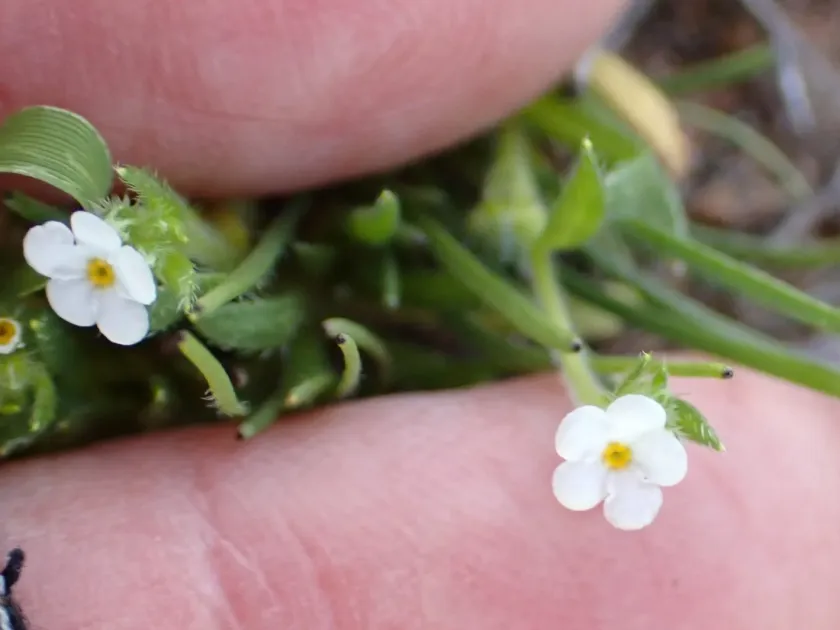
Description
Growing requirements
Plagiobothrys collinus, commonly known as a member of the Boraginaceae family, is an annual herbaceous plant native to Western North America. It is typically found in open, grassy habitats such as hillsides and valley floors where it thrives under specific seasonal moisture conditions.
The plant requires well-drained soils, preferably with a neutral to slightly alkaline reaction. It is highly sensitive to root waterlogging, which necessitates careful site selection on slopes or raised beds to prevent anaerobic conditions in the root zone during wet weather.
Regarding climate requirements, the species is adapted to Mediterranean-type climates with cool, wet springs followed by hot, dry summers. It completes its lifecycle rapidly, ensuring seed production before the onset of extreme summer heat, which is a vital survival strategy for the species.
From an agronomical perspective, weed control is a crucial factor during the establishment phase. As a relatively small plant, it cannot compete with aggressive weeds for nutrients and space, making early-season mechanical or manual intervention necessary for successful development.
Propagation is primarily achieved through seeds, which often possess dormancy mechanisms that respond to seasonal temperature fluctuations. For optimal germination, growers should mimic natural conditions by providing cold stratification, which significantly improves the percentage of viable seedlings in field conditions.