
Plagiobothrys uncinatus
Plagiobothrys uncinatus
Description
Growing requirements
Plagiobothrys uncinatus, commonly known as a type of popcornflower, is a member of the Boraginaceae family. This annual herb is indigenous to North America, specifically found in the diverse landscapes of California, where it thrives in specialized wetland habitats.
The species is typically found in vernal pools, drying lake beds, and other seasonally moist environments. Its life cycle is strictly synchronized with the availability of water, beginning germination in late winter or early spring when soil moisture is at its peak.
Regarding soil requirements, the plant prefers heavy, clay-based soils that are capable of holding water for extended periods. These substrate conditions are crucial for supporting the plant through its early developmental stages before the onset of the dry season.
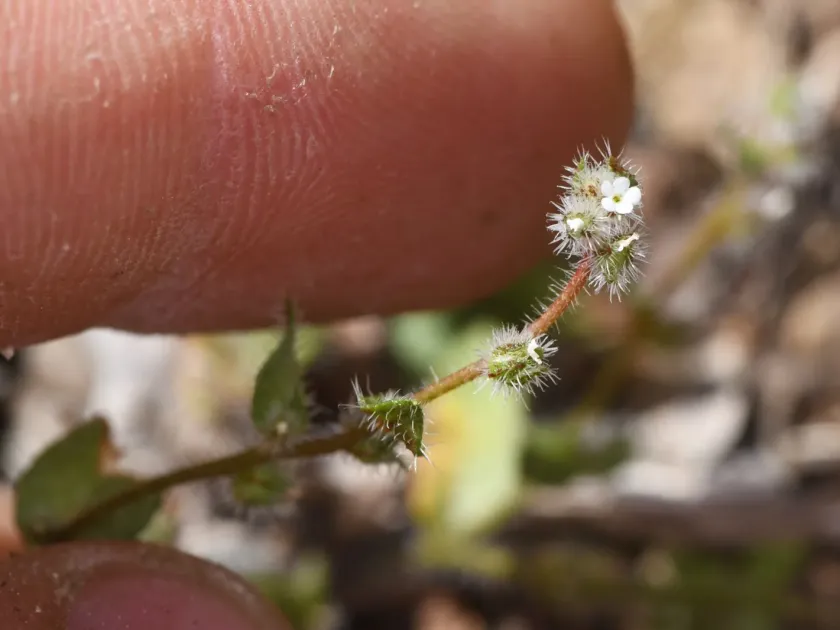
Botanically, the plant features characteristic hairs on its foliage and stems, serving as an adaptation to the high light and heat exposure common in its native range. The inflorescences are small and white, typical of the genus Plagiobothrys.
While not a commercial crop, Plagiobothrys uncinatus serves as an important bio-indicator for healthy vernal pool ecosystems. Conservation efforts focus on protecting these specific wetland sites to ensure the continued survival of this and other specialized flora.