
Plagiobothrys figuratus
Plagiobothrys figuratus
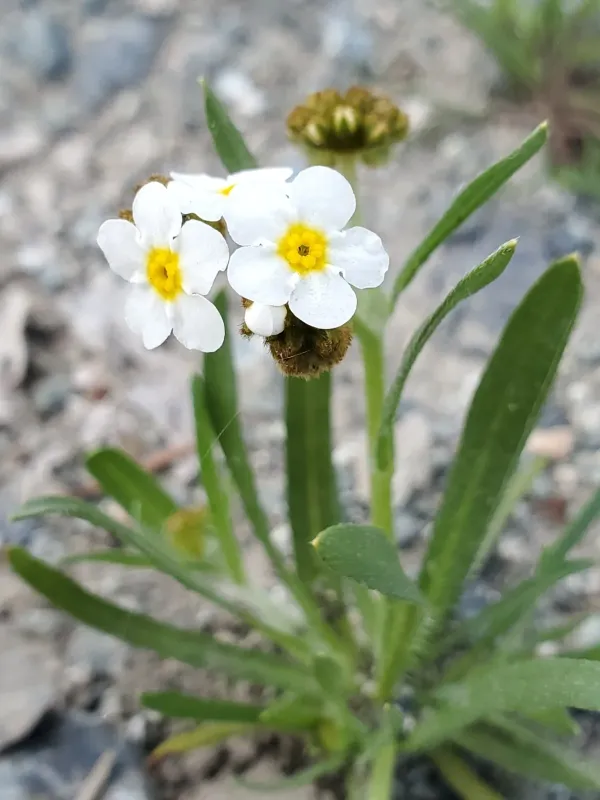
Description
Sowing dates
Sowing Plagiobothrys figuratus is most successful when performed in late autumn, allowing the seeds to undergo natural stratification over the winter months. This period of cold dormancy is critical for uniform germination in the early spring.
Seeds should be sown shallowly, ideally just pressed into the soil surface or covered with a very thin layer of fine substrate. Since they require light to germinate effectively, deep planting should be strictly avoided.
For optimal results, maintain consistent moisture in the seedbed throughout the germination phase. A light misting or gentle irrigation prevents the displacement of small seeds and keeps the surface environment conducive to root initiation.
If sowing in containers, ensure the mix is well-draining but moisture-retentive. Once seedlings develop their first true leaves, thinning is necessary to ensure each plant has enough space to develop its basal rosette.
The spacing should be maintained at roughly 10–15 cm to allow for proper airflow. Proper density is essential not only for the health of the plants but also to prevent the suppression of weeds through the formation of a dense carpet.
Growing requirements
Plagiobothrys figuratus, a member of the Boraginaceae family, is naturally adapted to moist, open meadows and wetland edges. It thrives in soils that remain consistently damp throughout the early growing season.
The plant performs best in heavy, moisture-retentive clay or silty soils with a slightly acidic to neutral pH. While it can handle periodic flooding, it requires well-aerated conditions to prevent root suffocation during periods of intense heat.
Exposure to full sun is ideal for maximizing the decorative potential and blooming intensity of the species. While it can tolerate partial shade, insufficient light often results in leggy growth and reduced flower production.
Climate-wise, the species is hardy and well-adapted to regions with cool, wet springs. It does not require high levels of supplemental nitrogen, as it is naturally efficient in capturing nutrients from rich meadow soils.
Maintenance of soil moisture is the primary labor requirement. In areas with low rainfall, supplemental irrigation is needed to maintain the plant's vigor until it enters its dormant phase after seed maturation.
Main diseases and pests
Powdery mildew represents a significant threat during periods of high humidity and stagnant air. Proper spacing and site selection that promotes good air circulation are the most effective preventative strategies.
Slugs and snails are the most notorious pests for Plagiobothrys figuratus, especially when the plants are in their initial stages of development. Their grazing can devastate a young population if not controlled.
Root rots are frequently associated with waterlogged, oxygen-deprived conditions. Providing adequate drainage, even in plants adapted to moisture, is crucial to ensuring a healthy root system throughout the season.
Aphid infestations may occur on the flower stalks, leading to stunted growth and reduced seed quality. Monitoring for early signs of aphids is recommended, followed by the use of appropriate biological controls.
Regular weeding is essential in the early stages of plant growth. Because the crop is relatively small in stature initially, competition from aggressive weed species can easily overwhelm it, necessitating manual or selective mechanical weeding.
Harvesting
Harvesting usually occurs once the seeds have reached physiological maturity, indicated by a shift in color of the seed pods or capsules. Timing is critical to prevent premature shattering of the seeds in the field.
The plants are typically cut near the base using a sickle or specialized small-scale harvester. After cutting, they should be gathered into bundles and allowed to dry in a ventilated, shaded area to prevent mold growth.
Threshing involves mechanical or manual beating of the dried material to separate the seeds from the remaining vegetation. This should be performed carefully to avoid crushing the seeds.
Post-harvest cleaning requires winnowing to remove light chaff and debris. High-quality seeds should be cleaned immediately after drying to maintain long-term viability and prevent metabolic activity that could lead to spoilage.
Stored seeds should be kept in a cool, dry environment to ensure longevity. Proper moisture levels in storage containers are essential to prevent fungal contamination until the next sowing cycle begins.