


Reference · Crops
Phacelia
Phacelia
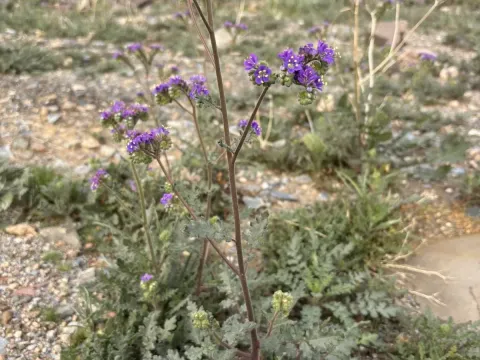
Phacelia (Phacelia tanacetifolia) is a fast-growing annual plant belonging to the Boraginaceae family, widely appreciated as a premium cover crop and bee forage.
4
items
What the section contains
Marketplace
Products in this section · 11


Phacelia
Sowing can begin in early spring once the soil reaches temperatures above 5°C. Phacelia is known for its high tolerance to frost, making it suitable for early seasonal planting.
For consistent flower production, sequential sowing every 3 weeks is recommended until mid-summer. This ensures a continuous supply of pollen and nectar for pollinators.
The seeding rate typically ranges from 8 to 12 kg per hectare, with seeds sown at a depth of 2-3 cm as they require light to germinate effectively.
The plant demonstrates vigorous development, reaching its full vegetative potential and initial flowering stages in approximately 40 to 50 days post-germination.
Phacelia is highly adaptable to various soil types, including sandy, loamy, and even poor or stony soils, provided there is minimal water stagnation.
It exhibits remarkable drought resistance once established, though it requires sufficient soil moisture during the germination phase to ensure a dense stand.
The crop thrives in sunny locations but also maintains good performance in semi-shaded areas, often being planted in orchards and vineyards for soil protection.
As a green manure, it improves soil structure by creating a dense network of fine roots that aerate the soil and increase its organic matter content.
Phacelia acts as an efficient nutrient scavenger, capturing residual nitrogen from the soil and releasing it back to subsequent crops upon decomposition.
The biomass yield of phacelia can reach 20 to 30 tons per hectare depending on growing conditions, significantly boosting the soil's organic matter.
As a honey plant, it is one of the most productive species, capable of yielding up to 500 kg of high-quality, fragrant honey per hectare under optimal conditions.
Yield stability is strongly influenced by the availability of pollinators and climatic factors during the extended flowering period, which can last for over a month.
Seed production yields usually vary between 500 and 800 kg per hectare, providing a viable economic incentive for growers focusing on seed multiplication.
The rapid cycling of this crop allows for multiple green manure incorporations per season, maximizing the beneficial impact on soil fertility.
Phacelia is remarkably resistant to most common agricultural pests and diseases, which is a major advantage for integrated pest management programs.
It is not a host for the most common crop diseases, such as clubroot or cereal rusts, making it an excellent bridge crop for breaking disease cycles.
Root rot issues may arise only in conditions of excessive waterlogging or poor drainage, which should be managed through proper site selection and soil preparation.
Because it attracts beneficial insects and predatory wasps, phacelia serves as a natural biological control agent, reducing the need for chemical pesticide intervention.
There are no major pest threats that require chemical control in phacelia fields, reinforcing its reputation as an environmentally friendly agricultural crop.
When used as green manure, phacelia should be mowed at the beginning of the full flowering stage to prevent seed set and potential unwanted self-seeding.
The biomass is usually shredded and incorporated into the top 10-15 cm of soil, allowing for rapid microbial decomposition and nutrient release.
For seed harvesting, the crop is gathered when the lower seed pods turn brown, using standard harvesting equipment adjusted for small, light seeds.
Post-harvest, seeds must be dried immediately to prevent heating and fungal development, as they are sensitive to moisture accumulation during storage.
Proper cleaning and storage in a cool, dry place allow phacelia seeds to retain high germination viability for up to several years after harvest.