
Plagiobothrys lithocaryus
Plagiobothrys lithocaryus
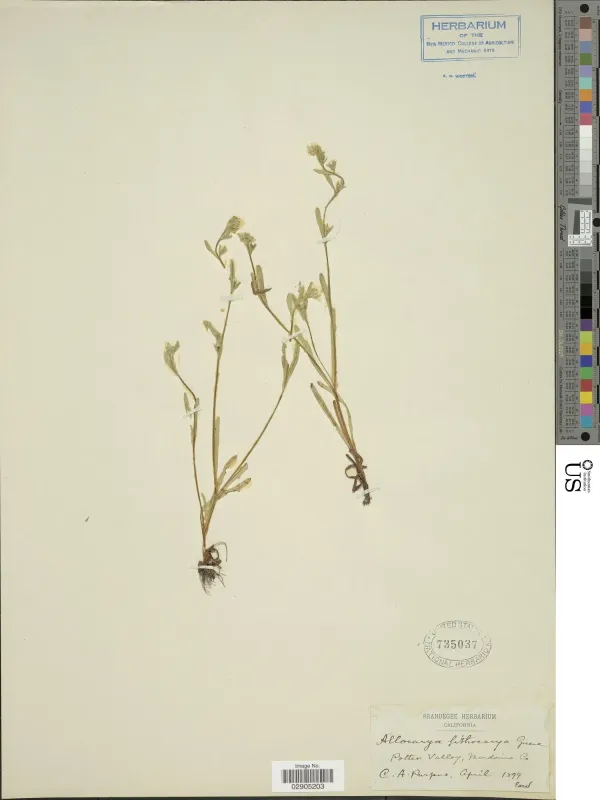
Description
Sowing dates
Sowing of this species is typically carried out in the autumn period, which is determined by its biological developmental cycle as a typical ephemeral plant.
For successful seed germination, a stratification period is required under conditions of naturally occurring low temperatures during the winter season.
The sowing depth for seeds must be minimal, as the small seeds of this plant require sufficient light exposure to activate germination processes.
Optimal germination rates are achieved by maintaining stable substrate moisture levels throughout the entire early spring growth period.
The recommended seeding density is calculated based on the necessity of providing each individual plant with sufficient space for normal branching.
Growing requirements
Plagiobothrys belongs to the Boraginaceae family and represents a highly specialized species adapted to specific ecological niches.
The crop has high light requirements, preferring open areas with a full sun cycle without any shading from other vegetation.
A key factor for development is soil composition, which must be well-drained while retaining adequate moisture during the early vegetative phase.
The plant exhibits high sensitivity to excessive nitrogen content, so the application of fertilizers must be strictly controlled and measured.
Developing a full root system requires a neutral or slightly acidic soil pH level along with proper soil aeration.
Main diseases and pests
The main threat to this crop is fungal diseases that develop when water stagnates in the root zone during damp spring weather conditions.
The plant is susceptible to root rot, which can spread rapidly if the drainage system on the planting site is compromised or insufficient.
Pests such as leaf miners and certain aphid species can cause damage to the vegetative mass during the active stem growth phase.
Weed control is critically important as the crop possesses weak competitive ability during the initial stages of its ontogenesis.
Prevention of phytopathologies involves the use of systemic fungicides at the first signs of leaf spotting or other symptoms.