
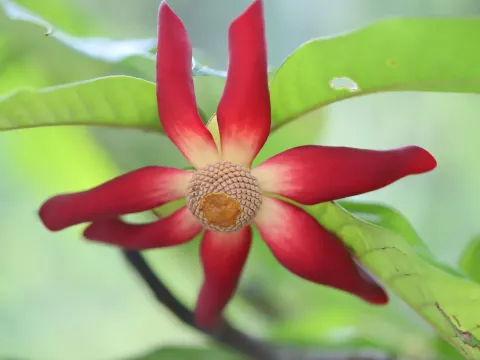
Uvaria
Uvaria
Uvaria is a genus of climbing shrubs and woody vines belonging to the Annonaceae family. Native to tropical regions across Africa, Asia, and Australia, these plants thrive in humid forests where they benefit from dense canopy cover and high soil nutrient availability.
What the section contains
 Hairy uvaria
Uvaria hirsuta
Hairy uvaria
Uvaria hirsuta
 Uvaria acuminata
Uvaria acuminata
Uvaria acuminata
 Uvaria afzelii
Uvaria argentea
Uvaria argentea
Uvaria afzelii
Uvaria afzelii
Uvaria argentea
Uvaria argentea
 Uvaria caffra
Uvaria caffra
Uvaria caffra
 Uvaria chamae
Uvaria chamae
Uvaria chamae
 Uvaria concava
Uvaria cuneifolia
Uvaria cuneifolia
Uvaria curtisii
Uvaria curtisii
Uvaria excelsa
Uvaria excelsa
Uvaria concava
Uvaria concava
Uvaria cuneifolia
Uvaria cuneifolia
Uvaria curtisii
Uvaria curtisii
Uvaria excelsa
Uvaria excelsa
 Uvaria grandiflora
Uvaria grandiflora
Uvaria grandiflora
 Uvaria griffithii
Uvaria griffithii
Uvaria griffithii
 Uvaria hamiltonii
Uvaria hamiltonii
Uvaria hamiltonii
 Uvaria littoralis
Uvaria lobbiana
Uvaria lobbiana
Uvaria littoralis
Uvaria littoralis
Uvaria lobbiana
Uvaria lobbiana
 Uvaria macropoda
Uvaria macropoda
Uvaria macropoda
 Uvaria micrantha
Uvaria microcarpa
Uvaria microcarpa
Uvaria micrantha
Uvaria micrantha
Uvaria microcarpa
Uvaria microcarpa
 Uvaria narum
Uvaria pauciovulata
Uvaria pauciovulata
Uvaria narum
Uvaria narum
Uvaria pauciovulata
Uvaria pauciovulata
 Uvaria sphenocarpa
Uvaria tortilis
Uvaria tortilis
Uvaria welwitschii
Uvaria welwitschii
Uvaria sphenocarpa
Uvaria sphenocarpa
Uvaria tortilis
Uvaria tortilis
Uvaria welwitschii
Uvaria welwitschii
 Uvaria zeylanica
Uvaria zeylanica
Uvaria zeylanica
Uvaria
The climate requirements for Uvaria are strictly tropical, necessitating consistent warmth and protection from any frost or sudden temperature drops. These plants flourish in regions with high precipitation and elevated humidity, which are essential for maintaining healthy leaf turgor and active metabolic processes.
Successful cultivation requires well-draining, nutrient-rich soils with a slightly acidic pH profile. Poor drainage poses a significant risk to the plant, as waterlogging can rapidly lead to root rot and systemic decline, often necessitating the use of raised beds or specialized potting mixes in container-based operations.
Soil management for Uvaria includes the regular application of organic matter to mimic forest-floor conditions. Mulching is highly recommended to regulate soil temperature and minimize moisture evaporation, which is critical during the dry seasons in tropical cultivation zones.
Light exposure must be carefully managed; while Uvaria plants require abundant energy for growth, they are susceptible to photo-inhibition and leaf scorch if exposed to intense, direct midday sun. Partial shade or filtered light conditions are generally optimal for most species in the genus.
The primary agricultural interest in Uvaria centers on its edible fruits, which are locally valued for their unique aromatic profiles and nutrient density. These fruits are often harvested at the peak of maturity when the outer skin softens and releases a distinct fragrance.
Harvesting is typically performed manually to preserve the delicate structural integrity of the fruits. Given their short shelf life, prompt post-harvest handling is required to maintain quality and prevent rapid spoilage, making local consumption or immediate processing the most viable economic strategies.
Beyond culinary uses, various Uvaria species are researched for their secondary metabolites, including essential oils and alkaloids found in the leaves, roots, and bark. These compounds have potential applications in the cosmetic and pharmaceutical industries due to their bioactive properties.
Uvaria also holds potential as an ornamental plant in tropical landscaping, valued for its fragrant and visually striking flowers. It serves as an effective screen or climber when provided with adequate support structures, contributing to both aesthetic and biodiversity goals.
Future agricultural potential of the genus depends on the domestication and selective breeding of more productive varieties. Establishing standardized cultivation practices remains a priority for researchers interested in diversifying tropical fruit production systems.