
Rollinia
Rollinia
Rollinia (Rollinia), a member of the Annonaceae family, is propagated primarily through seeds or grafting. Seeds have a very short viability period and must be planted immediately after extraction from mature fruits to ensure high germination rates.
What the section contains


Rollinia
Successful germination requires a substrate with consistent high moisture levels and a soil temperature maintained between 25°C and 30°C. Depending on the conditions, the emergence of seedlings may take anywhere from four to eight weeks.
In commercial orchards, grafting onto suitable rootstocks from other Annonaceae species is the standard practice. This method ensures uniformity in fruit quality and significantly reduces the time required for the tree to reach maturity.
Young seedlings are sensitive to direct, harsh sunlight and require partial shade during their early growth stages. Proper hardening off before moving them to a permanent location is crucial for long-term survival.
The ideal time for transplanting is the beginning of the rainy season. This timing allows the root system to establish itself effectively before the onset of drier conditions, ensuring better resilience for the young tree.
Rollinia is a tropical species that thrives in regions with warm temperatures and high relative humidity. It is extremely sensitive to frost, which can kill young trees and severely damage the canopy of mature ones.
The crop prefers deep, fertile, and well-drained soils. Waterlogged conditions are detrimental as they lead to root suffocation and increased susceptibility to soil-borne pathogens, making proper drainage a fundamental requirement.
While the tree needs plenty of sunlight to maximize fruit production, young specimens require protection from excessive afternoon sun to prevent leaf scorching. Wind protection is also essential to preserve the integrity of the large, fragile leaves.
The plant requires consistent moisture throughout the year. During the flowering and fruiting stages, any significant water stress can lead to the premature dropping of blossoms and developing fruits, causing substantial yield loss.
Soil nutrient management involves regular applications of organic matter and balanced fertilizers. Since the tree is fast-growing, it requires adequate nitrogen and potassium levels to sustain its foliage and fruit development.
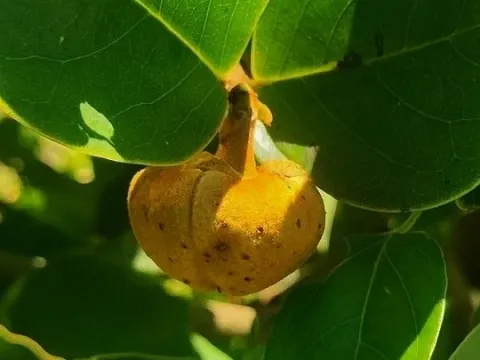
The fruit, commonly known as biriba, is prized for its creamy, custard-like texture and sweet, lemony flavor. Grafted trees typically begin bearing fruit within three to five years, compared to much longer periods for trees grown from seed.
Annual yields for a healthy, mature tree can range from 20 to 50 kilograms, depending on the site-specific climatic conditions and the intensity of cultural practices such as pruning and fertilization.
Rollinia fruits have a very short shelf life once ripe, which limits their distribution to local markets. They are best enjoyed fresh or used as an ingredient in desserts, sorbets, and smoothies.
Harvested fruits are highly perishable and prone to bruising, which complicates large-scale commercial logistics. Improving post-harvest handling is a key area of interest for farmers aiming to expand their market reach.
Ongoing agricultural efforts are focused on selecting cultivars with firmer rinds to improve durability. Currently, most production relies on local landraces that offer high quality but have limited storage stability.
Mealybugs and scale insects are common pests that feed on sap, often congregating on young shoots and the undersides of leaves. Their activity can stunt growth and promote the development of sooty mold.
Fruit flies pose a major threat during the ripening phase, as they lay eggs within the developing fruit. Controlling these pests is vital to prevent fruit rot and economic loss, often requiring integrated pest management.
Anthracnose is a frequent fungal problem that affects both foliage and ripening fruit, especially in humid climates. Maintaining an open tree canopy through strategic pruning helps improve airflow and reduces disease incidence.
Root rot, often caused by Phytophthora species, is a common issue in poorly drained soils. Prevention is far more effective than treatment, emphasizing the need for proper site selection and soil management.
Integrated pest management (IPM) strategies, including biological controls and targeted monitoring, are recommended to maintain plant health while minimizing reliance on broad-spectrum chemical pesticides.
Harvesting is a manual process that requires precision. Fruits are clipped from the branches using shears to avoid damaging the delicate stem or causing unnecessary movement of the branch, which could bruise the fruit.
Maturity is indicated by the skin color changing to a light yellow-green and the fruit yielding slightly to gentle pressure. It is critical to monitor the trees daily, as fruit can ripen and spoil within a very short timeframe.
Fruits should never be allowed to drop to the ground, as any impact results in rapid oxidation and darkening of the pulp. The use of cushioned harvest baskets or protective layers is standard practice.
Ideally, harvest should take place in the early morning while the fruit temperature is still low. This minor detail significantly helps in maintaining the quality and extending the shelf life of the harvested produce.
After harvesting, fruits should be sorted in the field. Those nearing full ripeness should be kept in cool, ventilated areas for immediate sale, while firmer fruits can be held slightly longer for subsequent distribution.