
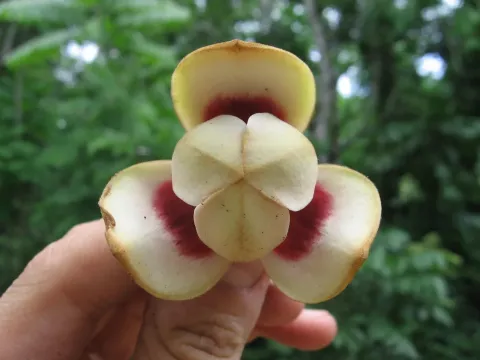
Uvariodendron
Uvariodendron
Uvariodendron is a genus of evergreen trees and shrubs within the Annonaceae family. These plants are native to the tropical forests of East Africa, where they thrive in warm, humid conditions beneath the canopy of larger trees.
What the section contains
Uvariodendron
The cultivation of Uvariodendron requires a tropical climate with consistent temperatures. The plant is extremely sensitive to cold and frost, demanding an environment where temperatures remain between 22 and 30 degrees Celsius year-round.
Regarding soil requirements, the species prefers deep, fertile, and well-draining soils rich in organic matter. A slightly acidic to neutral pH level is ideal for the uptake of essential nutrients needed for healthy leaf development.
Light management is crucial, as these plants are naturally adapted to dappled light or semi-shade conditions. Exposure to direct, harsh sunlight can damage the foliage, while complete darkness will significantly stunt plant growth.
Agrotechnical maintenance focuses on maintaining high humidity levels. In non-native regions, these plants are usually kept in controlled greenhouse environments to manage water stress and ambient moisture levels.
The fruits produced by Uvariodendron species are notable for their biological properties and traditional usage. Harvesting is typically done by hand, as the fruits are often delicate and require careful handling to maintain quality.
The plant has various potential uses beyond its fruit, including the potential medicinal properties of its leaves and bark. Detailed research into the phytochemical composition is ongoing within the botanical and pharmacological sectors.
Since the fruits are perishable, post-harvest handling is critical. They are best harvested at the peak of maturity and processed or consumed quickly to avoid rapid decay caused by tropical climate storage conditions.
Yield management is dependent on tree age and environmental stability. Mature trees under favorable conditions can provide consistent harvests, although quantitative data remains limited due to the plant's exotic status.
For agricultural purposes, the cultivation is currently restricted to its natural range and specialized tropical nurseries that supply rare and exotic botanical specimens to collectors worldwide.