
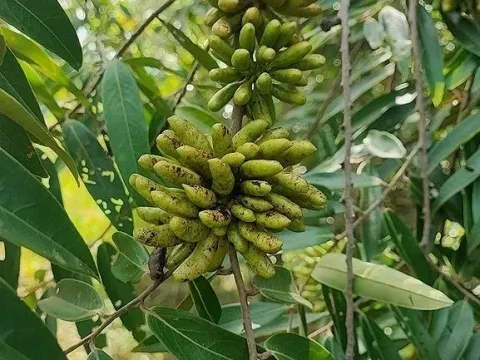
Xylopia
Xylopia
Xylopia is a genus of evergreen trees and shrubs belonging to the Annonaceae family. Native to tropical regions of Africa, South America, and Southeast Asia, these plants are well-adapted to the hot and humid environment characteristic of tropical rainforests.
What the section contains
 Brazilian xylopia
Xylopia brasiliensis
Brazilian xylopia
Xylopia brasiliensis
 Rusty xylopia
Xylopia ferruginea
Rusty xylopia
Xylopia ferruginea
 Xylopia aethiopica
Xylopia aethiopica
Xylopia aethiopica
 Xylopia aromatica
Xylopia caudata
Xylopia caudata
Xylopia aromatica
Xylopia aromatica
Xylopia caudata
Xylopia caudata
 Xylopia championii
Xylopia ekmannii
Xylopia ekmannii
Xylopia championii
Xylopia championii
Xylopia ekmannii
Xylopia ekmannii
 Xylopia elliptica
Xylopia elliptica
Xylopia elliptica
 Xylopia frutescens
Xylopia frutescens
Xylopia frutescens
 Xylopia fusca
Xylopia fusca
Xylopia fusca
 Xylopia longipetala
Xylopia magna
Xylopia magna
Xylopia longipetala
Xylopia longipetala
Xylopia magna
Xylopia magna
 Xylopia malayana
Xylopia malayana
Xylopia malayana
 Xylopia nigricans
Xylopia richardii
Xylopia richardii
Xylopia nigricans
Xylopia nigricans
Xylopia richardii
Xylopia richardii
Xylopia
For successful growth, Xylopia requires high temperatures and consistent moisture throughout the year. The optimal temperature range is between 22 and 30 degrees Celsius, and the plant is highly sensitive to frost, which limits its outdoor cultivation to tropical climates.
The plant thrives in deep, fertile, and well-drained soils. Proper drainage is essential, as stagnant water in the root zone can lead to physiological stress and root rot, which are common issues in regions with heavy rainfall.
Xylopia is generally sun-loving, although young saplings may benefit from partial shade to protect them from excessive light intensity. As they mature, they require ample sunlight to maximize fruit production and the development of aromatic compounds.
Agronomic management involves maintaining soil fertility, implementing appropriate spacing between trees, and ensuring sufficient weed control to prevent competition for nutrients and water during the establishment phase.
The economic value of Xylopia is primarily derived from its fruits, widely known as "African pepper" or "Guinea pepper." These fruits are harvested for their pungent, spicy flavor, which is a result of their rich essential oil profile, including compounds like monoterpenes.
Yield capacity is influenced by the genetic quality of the cultivar, the age of the tree, and the management practices applied. Established trees are capable of producing consistent annual yields for many years, providing a reliable source of income for smallholder farmers.
Harvesting is labor-intensive and performed manually. It is crucial to collect the fruit at the peak of maturity to ensure the best flavor profile and chemical composition, as improper timing can lead to significant losses in essential oil concentration.
Post-harvest processing involves drying the fruits under controlled conditions. Solar drying or mechanical drying is used to reduce moisture content to safe levels, preventing microbial growth and preserving the sensory attributes of the spice.
Beyond culinary use, the plant's various parts are explored for potential applications in the pharmaceutical and cosmetic industries due to their reported antioxidant and antimicrobial properties.
Diseases in Xylopia plantations are predominantly fungal in nature, often exacerbated by high humidity and poor air circulation. Leaf spot and root diseases are the most frequent health issues affecting these crops.
Pest pressure from insects, such as beetles and caterpillars, can significantly damage foliage and developing fruit. These pests are capable of causing localized outbreaks that can reduce the overall health and yield of the plantation.
Effective management strategies include cultural practices such as regular pruning to improve airflow within the canopy, which lowers the humidity levels around the foliage and reduces the risk of fungal proliferation.
Integrated Pest Management (IPM) is recommended for sustainable production. This includes monitoring for pest activity and using biological control agents to mitigate the need for chemical interventions, thus protecting the ecological balance.
Proactive sanitation measures, including the removal and disposal of infected plant material, are essential to stop the spread of pathogens and maintain the productivity of the plantation throughout its life cycle.