
Uvaria narum
Uvaria narum
Description
Growing requirements
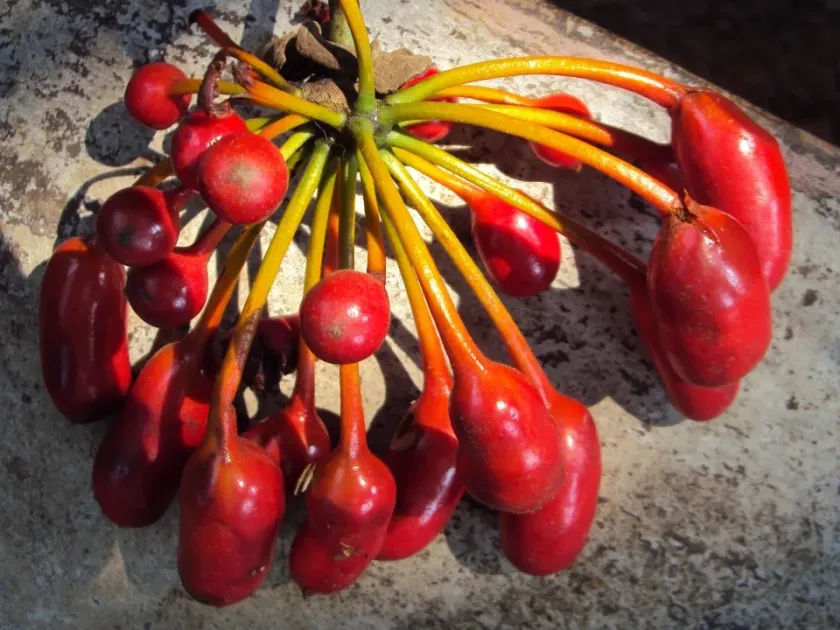
Uvaria narum is an evergreen, climbing shrub or liana belonging to the Annonaceae family. It is native to the lush tropical forests of Southern India and Sri Lanka, where it thrives in humid, lowland habitats. This species is highly valued for its medicinal properties and unique aromatic composition.
The crop requires a tropical climate with high temperatures and consistent humidity levels throughout the year. It does not tolerate cold drafts or frost, making it suitable for cultivation primarily in tropical or strictly controlled greenhouse environments with temperatures ranging between 22 and 30 degrees Celsius.
For optimal growth, Uvaria narum prefers deep, well-drained loamy soils rich in organic matter. Soil acidity should be neutral to slightly acidic. Proper site preparation is essential to prevent waterlogging, which can lead to root rot in this particular species.
As a climbing plant, Uvaria narum requires strong physical support. In field conditions, farmers use sturdy trellises or encourage the plants to climb neighboring trees. Regular pruning is necessary to maintain the plant's shape and promote a higher density of foliage and roots.
Adequate irrigation is crucial during the growing season. The plant should be watered deeply, ensuring the soil remains moist but not saturated. Foliar feeding with liquid organic fertilizers during the peak growth phase significantly boosts the biomass yield.
Harvesting
The primary economic focus of Uvaria narum is the harvesting of its roots, which are used in Ayurvedic and traditional medicine. The roots are known for their essential oil content, which exhibits significant antibacterial and anti-inflammatory properties used in various formulations.
Harvesting is typically done when the plant is between three to five years old. At this stage, the root system is well-established, allowing for a sustainable harvest without permanently damaging the parent plant if done selectively and with care.
Leaves and stems are also harvested periodically to extract aromatic essential oils for the cosmetic and perfume industries. This secondary harvest provides an additional income stream for farmers, supplementing the primary revenue from root sales.
Post-harvest processing involves washing the roots to remove dirt and debris, followed by slicing and drying in a controlled, shaded environment. Direct sunlight should be avoided to prevent the evaporation of volatile medicinal compounds.
Storage of the finished product requires cool, dry conditions and airtight packaging. This ensures the shelf life of the botanical material and maintains the concentration of active pharmaceutical ingredients essential for the buyers in the herbal health sector.