
Uvaria afzelii
Uvaria afzelii
Description
Growing requirements
Uvaria afzelii is a climbing shrub or liana belonging to the Annonaceae family. It is native to the tropical forests of West and Central Africa, where it thrives under the canopy of dense rainforests.
To succeed in cultivation, this plant requires a humid tropical climate with consistent temperatures ranging between 22°C and 30°C. It is highly sensitive to frost and cool temperatures, which can severely hinder its growth and reproductive phases.
The soil profile should be deep, fertile, and rich in organic matter. A well-drained medium is crucial, as the roots are susceptible to rot if they remain waterlogged for extended periods. Maintaining soil aeration is a priority for commercial growers.
Regarding light, the species prefers filtered sunlight. In a farming environment, providing partial shade is essential to mimic its natural understory habitat, especially during the early stages of plant development.
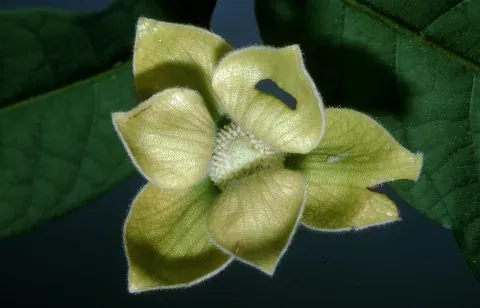
Botanically, the plant features alternate, leathery leaves and characteristic Annonaceae flowers with fleshy petals. The fruits are aggregates of berries, often turning a distinct color upon maturity, signaling that they are ready for harvest.
Harvesting
Harvesting Uvaria afzelii is typically a manual process due to the nature of the fruit, which is prone to bruising. Farmers monitor the fruit closely, looking for shifts in coloration and the development of a distinct, aromatic profile.
The primary utility of this crop is its edible fruit, which is highly valued in local African markets for its unique flavor and nutritional density. The fruits are commonly consumed fresh or integrated into regional culinary preparations.
Post-harvest handling is critical, given the high moisture and sugar content of the fruit, which leads to rapid senescence. Proper storage conditions, ideally in a cool environment, are required to prolong shelf life after harvest.
Beyond food production, the plant is historically significant in traditional practices, where various tissues, including roots and bark, are studied for potential pharmacological applications.
While primarily gathered from the wild, there is ongoing interest in stabilizing cultivation techniques for Uvaria afzelii to support small-scale sustainable agriculture in its native range.