
Uvaria zeylanica
Uvaria zeylanica
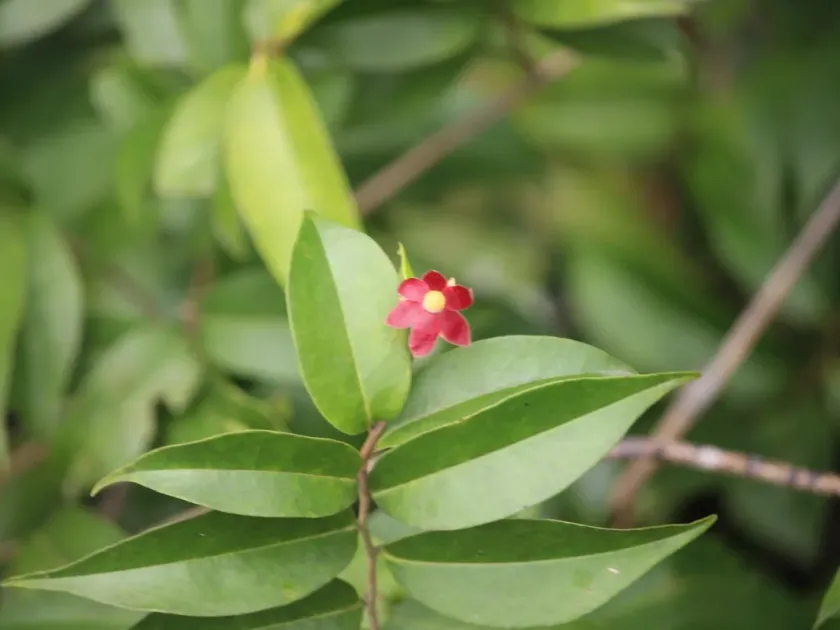
Description
Growing requirements
Uvaria zeylanica is a woody evergreen vine belonging to the Annonaceae family, native to the tropical forests of South and Southeast Asia. The plant is characterized by its climbing habit and aromatic foliage.
This species requires a tropical climate with high humidity and consistently warm temperatures. It is highly sensitive to frost, making it suitable for cultivation primarily in equatorial and tropical regions where temperature fluctuations are minimal.
Soil requirements involve well-draining, nutrient-rich substrates. The plant thrives in slightly acidic to neutral soils; however, it is essential to ensure that the root zone does not remain waterlogged to prevent fungal pathogens.
The optimal lighting condition is filtered sunlight or partial shade. In its natural habitat, it develops under the canopy of larger trees, so artificial shade or specific positioning is necessary in cultivation to prevent leaf scorch.
Agricultural maintenance involves regular monitoring of soil moisture and periodic pruning to manage the vigorous growth of the vines, ensuring that they remain within the space allocated for production.
Harvesting
The fruit of Uvaria zeylanica is harvested when fully ripe, typically indicated by a change in texture and the development of a specific, pleasant fragrance. Manual harvesting is the standard method due to the plant's climbing nature.
Economically, the plant is valued for its culinary uses, particularly in local traditional cuisines where the fruit is utilized in desserts and aromatic preparations.
Medicinal properties are frequently attributed to the plant in traditional botanical practices, though careful handling and specialized knowledge are required to manage the active biochemical compounds present in its extracts.
The aesthetic appeal of its fragrant flowers makes it a preferred choice for ornamental tropical gardening, provided that sturdy trellises or supports are available for the climbing stems.
Productivity can be maximized through consistent application of organic fertilizers during the pre-flowering stage, ensuring the plant has enough energy to support fruit development throughout the season.