
Hairy uvaria
Uvaria hirsuta
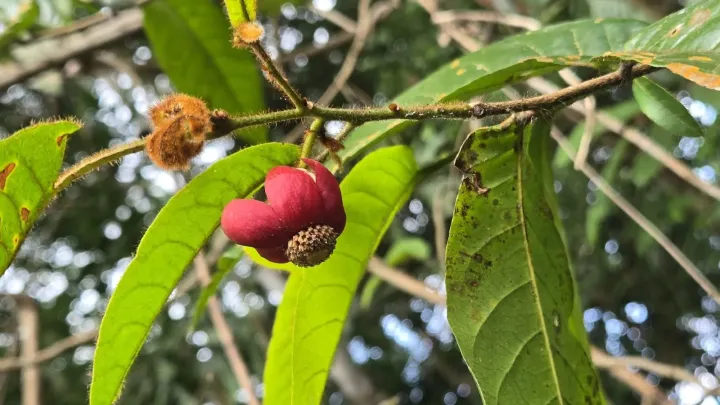
Description
Growing requirements
Hairy uvaria (Uvaria hirsuta) is a member of the Annonaceae family, recognized for its distinctive hairy stems and foliage. It is native to the tropical rainforests of Southeast Asia, thriving in equatorial climates.
The plant requires high humidity and consistent tropical temperatures ranging from 22°C to 30°C. It is extremely sensitive to cold temperatures and should not be exposed to anything below 15°C.
Cultivation requires well-drained, nutrient-rich soil with significant organic content. The plant benefits from a substrate that mimics the forest floor environment, ensuring aeration and moisture retention without waterlogging.
The botanical structure of the species involves woody, climbing vines with thick, leathery leaves and aromatic flowers, which are typical characteristics of the Annonaceae genus.
In terms of economic value, it is valued primarily for its bioactive properties used in traditional medicine and its potential interest in botanical gardens and niche ornamental markets.
Main diseases and pests
Common pests affecting Uvaria hirsuta include aphids and mealybugs, which are particularly attracted to the soft, hairy new growth found at the tips of the vines.
Fungal infections such as root rot can occur if the irrigation schedule is too frequent or if the soil drainage is inadequate, leading to stagnant moisture around the roots.
Foliar diseases may manifest as leaf spots or mildew when humidity levels fluctuate too drastically without adequate ventilation for the canopy.
Pest management is best handled through regular washing of the foliage with gentle soaps and ensuring the environment remains clean of debris.
Consistent monitoring of soil moisture levels is essential to prevent the onset of soil-borne pathogens that thrive in consistently damp, low-oxygen environments.