
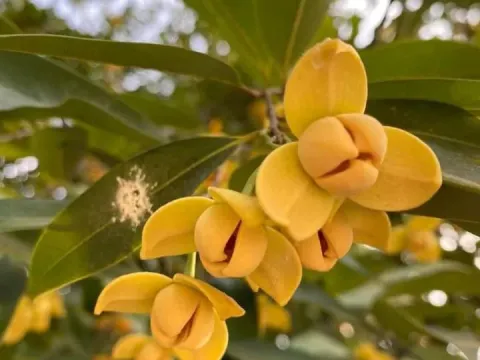
Sphaerocoryne
Sphaerocoryne
Sphaerocoryne is a genus of evergreen trees and shrubs belonging to the Annonaceae family. These plants are primarily native to the tropical regions of Southeast Asia, thriving in high-humidity environments where temperatures remain consistently warm throughout the year.
What the section contains


Sphaerocoryne
The climate requirements for this culture are strict: it thrives in tropical zones without temperature drops. Protection from cold winds and frost is essential, as the plant is not cold-hardy and will suffer significant damage if exposed to temperatures below 15°C.
Soil quality must be high, with a preference for well-draining, nutrient-rich loamy soils. Moisture management is critical; while the plant requires consistent watering to sustain its growth, excellent drainage is mandatory to prevent root rot, which is a common issue in tropical soil types.
Regarding light exposure, Sphaerocoryne prefers dappled sunlight. While mature trees can withstand higher light intensities, young specimens are susceptible to leaf scorch if exposed to direct, intense tropical sunlight for prolonged periods, requiring shade cloth or companion planting.
Agrotechnical management involves regular mulching to keep the root zone cool and moist. Applying organic fertilizer periodically during the growing season supports foliage development and fruit set, ensuring the health of the tree over its long lifespan.
The primary agricultural use of Sphaerocoryne is for its fruit production, which is valued in local markets for its unique aroma and flavor profile, common to many members of the Annonaceae family. The fruits are often used in regional culinary traditions for fresh consumption or processing.
In addition to food applications, the plant serves an important role in ornamental horticulture. Its aesthetic value, defined by thick, glossy leaves and elegant branch structure, makes it a favored choice for tropical landscape projects and botanical garden exhibits.
The harvesting process requires significant manual labor, as the fruits must be picked at the precise moment of maturity to balance shelf-life with flavor quality. Mechanical harvesting is currently not viable due to the delicate nature of the ripe fruit and the architectural complexity of the trees.
Beyond edible uses, there is potential for exploring the bark and leaf extracts in secondary industries, as various species within this genus have demonstrated potential biological activity that is currently being studied by researchers for pharmaceutical and cosmetic applications.
Future development for this crop relies on increasing the efficiency of nursery propagation and selecting superior cultivars that exhibit better resistance to local pests and diseases while maintaining high fruit quality for export-oriented tropical farming.