
Uvaria grandiflora
Uvaria grandiflora
Description
Growing requirements
Uvaria grandiflora is a robust, woody climber belonging to the Annonaceae family. This species is native to the tropical rainforests of Southeast Asia, thriving in regions with high precipitation and constant warmth, which are essential for its natural development.
The climate requirements for this plant are quite specific: it demands temperatures consistently between 22°C and 30°C. Cold spells, even short ones, can cause irreversible damage to the plant tissue, making it strictly a tropical crop suitable for greenhouses or tropical zones.
Soil quality must be high, emphasizing excellent drainage and organic content. The root system of this climber is sensitive to waterlogging; therefore, the planting site must be prepared with a thick layer of organic mulch and sandy loam to prevent root rot.
In terms of agricultural technique, providing structural support is critical. As a climbing plant, it needs sturdy trellises or arbors to spread its foliage effectively and ensure proper airflow between the stems, which is vital to prevent moisture-related infections.
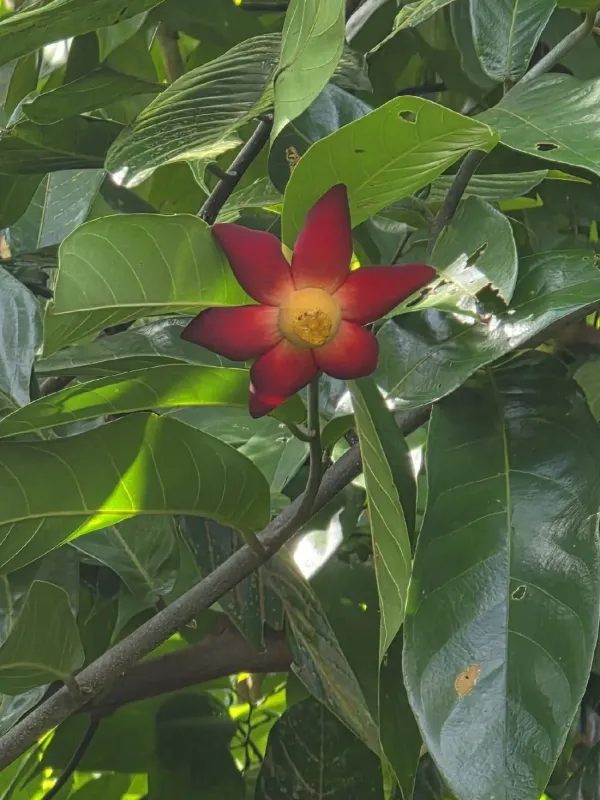
Botanically, the plant is recognized by its large, leathery leaves and distinctively shaped reddish-brown flowers. The plant exhibits a unique reproductive cycle where cross-pollination by insects is essential for the production of viable seeds and fruit clusters.
Main diseases and pests
The primary threats to Uvaria grandiflora in a cultivated environment include aphids and spider mites, which can proliferate rapidly in dry, hot conditions. Integrated pest management using neem oil or specific acaricides is recommended to maintain plant health.
Root rot is the most devastating disease, typically resulting from improper irrigation strategies or poorly drained containers. Maintaining a strict watering schedule and ensuring that the top layer of soil dries out slightly between waterings is the best way to avoid this issue.
Harvesting
The harvest of Uvaria grandiflora is primarily aimed at extracting medicinal components from its bark and roots. In traditional practices, these materials are processed into powders or infusions used for their reported analgesic and tonic properties.
Fruit harvesting is less common but occurs when fruits reach full maturity, indicated by a color change. Seeds are carefully extracted from the multi-carpellate fruits and dried under controlled conditions to maintain their viability for subsequent planting seasons.