
Uvaria macropoda
Uvaria macropoda
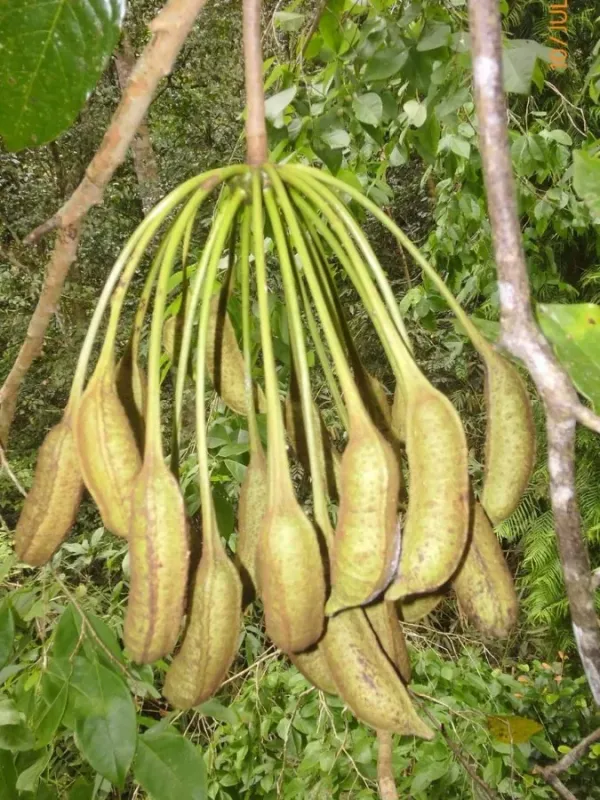
Description
Growing requirements
Uvaria macropoda is a member of the Annonaceae family, known for its presence in tropical forest ecosystems. It is a woody climbing plant or shrub adapted to high-humidity environments.
The plant thrives in fertile, well-draining soils rich in organic matter. Soil moisture management is vital, as the root system is highly sensitive to both waterlogging and prolonged drought conditions.
Optimal development requires consistent tropical temperatures, typically between 22 and 28 degrees Celsius. Protection from cold drafts and frost is mandatory, as even minor temperature drops can inhibit growth.
While seedlings may benefit from partial shade, mature plants require abundant sunlight to facilitate successful flowering and fruit production. Proper canopy management ensures that sunlight penetrates the inner branches.
Cultivation practices should include regular organic mulching to maintain soil temperature and moisture. Additionally, periodic pruning is necessary to control its climbing habit and direct energy toward fruit development.
Yield
The economic value of Uvaria macropoda is primarily linked to its edible fruits, which are traditionally harvested for local consumption due to their distinct organoleptic properties.
Yield capacity is influenced by environmental consistency and plant age. In sustainable agroforestry systems, the harvest can be quite productive, though it is usually gathered in small-scale, artisanal operations.
Because the fruits are delicate and perishable, they are not typically destined for long-distance export markets. Instead, they are consumed fresh or processed shortly after harvesting to preserve their flavor.
Post-harvest management involves careful handling to avoid bruising. In some regions, the plant is also valued for its medicinal properties, potentially offering secondary income streams for farmers.
As interest in underutilized tropical fruits grows, there is potential for selecting higher-yielding genotypes that could standardize production in controlled greenhouse or orchard settings.
Main diseases and pests
Fungal diseases remain the most significant threat to Uvaria macropoda, particularly in humid climates where stagnant air allows for pathogen proliferation. Ensuring good ventilation is a primary defense strategy.
Various sucking insects, such as aphids and scale insects, often infest the foliage. These pests not only weaken the plant but can also serve as vectors for secondary viral or fungal infections.
Root system issues, often caused by overwatering or poor soil drainage, can lead to rot. This is a critical concern, as recovery from severe root damage in tropical woody perennials is difficult.
Nematode infestations in the soil can hamper nutrient uptake. Growers often employ integrated pest management (IPM) to mitigate these risks without relying exclusively on heavy chemical treatments.
Routine scouting and the maintenance of a healthy, biodiverse growing environment help prevent outbreaks and sustain the overall vigor of the cultivation plot over several years.